
Melatonin is a natural hormone produced mainly by the pineal gland, a small gland located in the brain. Its secretion is closely linked to the light-dark cycle, making it a key regulator of our biological clock. The synthesis process of melatonin begins with tryptophan, an amino acid supplied through food, which is first converted into serotonin, and then into melatonin. In darkness, the production of this hormone increases, peaking during night hours, especially between 2 and 4 AM. During the day, under the influence of light, synthesis is inhibited, and melatonin levels in the blood sharply decrease.
Contents
- Melatonin – the hormone of sleep and darkness
- The role of melatonin in regulating the circadian rhythm
- Melatonin and sleep quality – what do studies say?
- Age and melatonin levels – why do seniors sleep worse?
- Facts and myths about melatonin
- Melatonin is a naturally occurring substance in the body – FACT
- Melatonin is safe and non-addictive – FACT
- Melatonin should only be taken for severe sleep disorders – MYTH
- The more melatonin, the better the sleep: MYTH
- Melatonin helps with all problems related to insomnia: MYTH
- Melatonin has antioxidant properties – FACT
- Melatonin in practice – indications for use
- Melatonin and lifestyle – how to naturally support its production?
- The versatile power of melatonin: how it affects our health beyond sleep
- Summary – key conclusions on the role of melatonin in health and sleep
Melatonin – the hormone of sleep and darkness
Melatonin is often called the “darkness hormone” because its secretion signals to the body that it’s time for rest and regeneration. Thanks to this hormone, our body can synchronize with the circadian rhythm, which is the natural cycle of sleep and wakefulness.
The role of melatonin in regulating the circadian rhythm
One of the most important tasks of melatonin is the regulation of the circadian rhythm, a biological cycle lasting approximately 24 hours. This rhythm includes not only sleep and wakefulness, but also a number of other physiological processes, such as hormone secretion, body temperature, blood pressure, and metabolism.
Under typical conditions, melatonin secretion begins in the evening, around 9-10 PM, when darkness falls. It reaches its highest concentration in the middle of the night, and in the morning, its level gradually decreases, which prepares the body for awakening and activity during the day. It is thanks to melatonin that our body knows when it should rest and when it should be active.
Melatonin and sleep quality – what do studies say?
Numerous scientific studies confirm that melatonin plays a key role in the process of falling asleep and maintaining proper sleep quality. In people with sleep disorders, melatonin supplementation can, among other things:
- improve sleep quality,
- lengthen its duration
- shorten the time needed to fall asleep.
- regulate the circadian cycle, which is particularly important for:
-
- shift workers,
- people traveling across time zones (jet lag),
- elderly individuals, in whom natural hormone production is already significantly lower.
It is worth emphasizing that the effects of melatonin intake are most visible in people whose sleep disorders result from a dysregulated circadian rhythm.
Age and melatonin levels – why do seniors sleep worse?
Melatonin levels in the body change with age. The highest concentration is observed in children, with the peak nocturnal amplitude occurring between 4 and 10 years of age. With advancing years, melatonin production gradually decreases, and after the age of 55, its level can be very low. In people over 60-70 years of age, the natural rhythm of this hormone’s secretion often disappears, leading to poorer sleep quality, more frequent awakenings during the night, and difficulty falling back asleep.
Seniors complain about poor sleep quality much more frequently than younger individuals. Melatonin deficiency in older people is often linked to a less active lifestyle, limited exposure to sunlight during the day, and excessive exposure to artificial light in the evening. All these factors can further dysregulate the natural circadian rhythm.
Facts and myths about melatonin
Many myths have grown around melatonin, which are worth clarifying to consciously use its potential. Below you will find claims and explanations as to why it is a myth or a fact.
Melatonin is a naturally occurring substance in the body – FACT
Melatonin is a hormone produced by the pineal gland, and its presence is essential for the proper functioning of the biological clock. Its level is highest at night and lowest during the day.
Melatonin is safe and non-addictive – FACT
Taken in appropriate doses, melatonin is considered a safe substance. It does not cause addiction, and its use does not lead to a “habituation” effect, unlike many sleeping pills. However, in the case of long-term supplementation, especially for many months, it is advisable to be cautious and consult a doctor, as not all long-term effects are precisely known. Some people may experience side effects such as headaches, daytime sleepiness, or mood changes.
Melatonin should only be taken for severe sleep disorders – MYTH
Melatonin can be used both acutely (e.g., for jet lag or shift work) and in chronic sleep disorders, especially in older people. It is not a substance reserved exclusively for severe cases.
The more melatonin, the better the sleep: MYTH
Taking a larger amount of melatonin supplement will not translate into deeper, longer, and more restorative sleep. It can even be the opposite, and excessively high doses of melatonin can do more harm than good. The human body produces melatonin in very small amounts – the peak concentration at night is only a few picograms per milliliter of blood. Supplements available on the market often contain doses from 0.5 mg to even 5 mg, which is many times more than the body needs. Studies show that even a small dose (e.g., 0.5-1 mg) is sufficient to signal to the body that it’s time to sleep.
Taking larger amounts of melatonin can actually disrupt the natural circadian rhythm. Excess hormone in the blood lasts longer, which can make you feel sleepy in the morning, have difficulty concentrating, experience dizziness, or a feeling of “brain fog.” Too high a dose often leads to a dysregulation of the biological clock, which ultimately worsens sleep quality in subsequent days.
Melatonin helps with all problems related to insomnia: MYTH
Melatonin is not a universal remedy for every form of insomnia. Melatonin primarily helps with sleep disorders resulting from a dysregulated circadian rhythm. In the case of sleep problems due to stress, chronic psychological tension, depression, anxiety disorders, or somatic diseases, its effect may be limited or even insufficient. Psychophysiological insomnia, resulting from excessive emotions, worries, or improper sleep habits, often requires a comprehensive therapeutic approach. This includes psychotherapy, relaxation techniques, lifestyle changes, and improved sleep hygiene. Melatonin can then play a supportive role, but it will not replace causal treatment.
Melatonin has antioxidant properties – FACT
Melatonin is distinguished by its exceptionally strong antioxidant activity. This means that this hormone helps us fall asleep and also actively supports the protection of cells against oxidative stress, which is one of the main factors accelerating the body’s aging processes and the development of many civilization diseases.
As an antioxidant, melatonin neutralizes free radicals. This means it destroys these highly reactive molecules formed as a result of metabolic changes, stress, pollution, or UV radiation. If not neutralized, free radicals can damage cell membranes, proteins, and even DNA, leading to premature aging and the development of diseases such as atherosclerosis, cancer, and neurodegenerative diseases. Melatonin has the ability to “scavenge” various types of free radicals, both water-soluble and fat-soluble, thereby protecting cells throughout the body – from the brain, through the skin, to internal organs.
Melatonin in practice – indications for use
Melatonin is used in the treatment and alleviation of various sleep disorders. It is most often recommended for people:
- with age-related sleep disorders, especially after 55 years of age,
- working in shifts, where the circadian rhythm is regularly disrupted,
- traveling across time zones (jet lag),
- with sleep-wake rhythm disorders, e.g., in delayed sleep phase syndrome.
Melatonin dosage should be adjusted to individual needs, age, and body weight. Typically, it is recommended to take 1-3 mg 30 minutes to 2 hours before planned sleep. In the case of jet lag, melatonin is used for several days after arrival in a new time zone.
Melatonin and lifestyle – how to naturally support its production?
Melatonin production can also be supported by an appropriate lifestyle. Melatonin levels are primarily influenced by:
- exposure to natural light during the day
- regularity of sleep and wake times
- physical activity during the day
- avoiding heavy meals and caffeine before sleep
- avoiding artificial light, especially blue light, in the evening.
Light emitted by computer screens, smartphones, or televisions effectively inhibits melatonin secretion, making it difficult to fall asleep. In addition, it is worth ensuring an appropriate temperature and darkness in the bedroom.
The versatile power of melatonin: how it affects our health beyond sleep
Although melatonin is primarily known as the sleep hormone, its action extends beyond regulating the circadian rhythm. The latest research indicates that melatonin can:
- have antioxidant properties,
- support the immune system,
- alleviate symptoms of seasonal depression,
- positively affect eye health.
However, its main and best-documented role remains the regulation of the sleep-wake cycle.
Summary – key conclusions on the role of melatonin in health and sleep
Melatonin is an important hormone regulating our circadian rhythm and sleep quality. Its supplementation can be an effective support in cases of sleep disorders, especially in older people, shift workers, or those traveling across time zones. However, it is worth remembering that it is not a universal solution for all sleep problems, and its effectiveness depends on the cause of the disorders. Myths surrounding melatonin often result from a lack of knowledge or incorrect use, which is why it is worth seeking verified information and practicing good sleep hygiene daily.
The proper functioning of the biological clock is the foundation of health and well-being – and melatonin, both naturally produced by the body and supplied in the form of supplements, can be a valuable ally in this process.
Sources:
- Bazire S. Psychotropic Drug Guide 2018, Volume 1, Gdańsk 2020.
- Karasek M., Clinical significance of melatonin, Borgis – Advances in Medical Sciences 10/2007, pp. 395-398.
- Kruczek M. et al., Plant melatonin as a little-known antioxidant and regulator of the biological clock – characteristics and application possibilities in the food industry, researchgate.net [online] https://www.researchgate.net/publication/303299874_Melatonina_roslinna_jako_malo_znany_przeciwutleniacz_i_regulator_zegara_biologicznego-_charakterystyka_i_mozliwosci_aplikacji_w_przemysle_spozywczym/link/573ba21308ae9f741b2d86fe/download [accessed: 13.06.2025].
- Rybakowski J. Clinical Psychopharmacology. Warsaw 2022.
- Szewczyk P.B, Dziuba A.M., Poniewierka E., Melatonin – metabolism and role of the pineal hormone. Piel. Zdr. Pub., 2018, pp. 135 – 139.
- Zawilska J.B., Melatonin – a hormone with sleep-inducing effects, Bromat. Chem. Toksykol. – XLI, 2008, 3, pp. 224-228.
Check out our offer
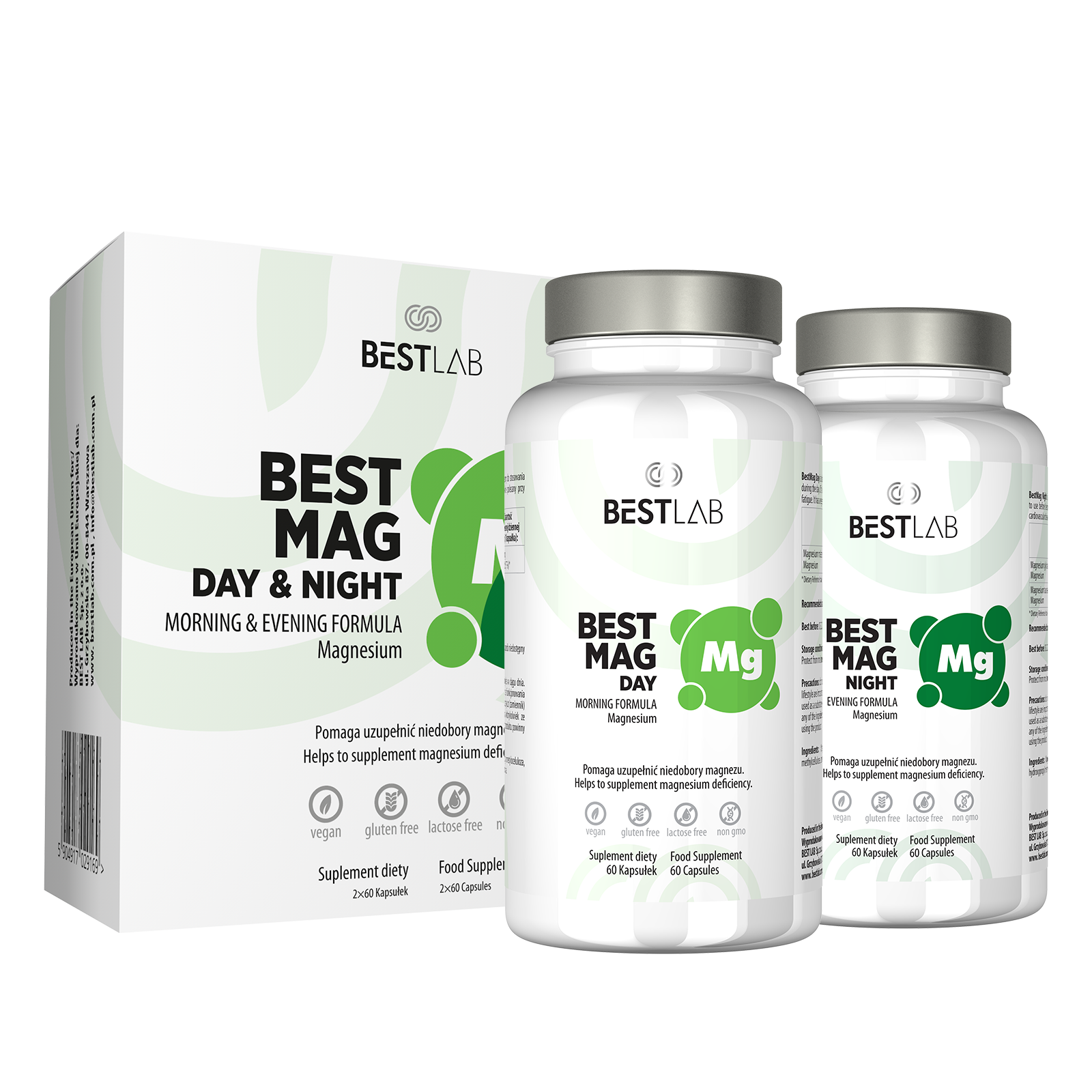
BestMag Day&Night 2×60 caps
£35.8
View Product →