
Another intense workout behind you? On one hand, you feel the endorphins of happiness circulating in your bloodstream, but on the other, your body feels tired? After intense exertion, the body needs regeneration. Without adequate rest, the body is unable to rebuild damaged muscle fibers, replenish energy reserves, or restore hormonal balance.
Contents
- Why is regeneration just as important as training?
- What to eat after a workout to help muscles regenerate?
- Home methods for muscle regeneration after a workout
- Best amino acids for muscle regeneration
- How to replenish electrolytes after a workout?
- What to take after a workout for fatigue? Energy supplements
- Protein supplements – building blocks for regenerating muscles
- Supplements for post-run recovery
- Your regeneration in a nutshell
Another intense workout behind you? On one hand, you feel the endorphins of happiness circulating in your bloodstream, but on the other, your body feels tired? After intense exertion, the body needs regeneration. Without adequate rest, the body is unable to rebuild damaged muscle fibers, replenish energy reserves, or restore hormonal balance. Are you wondering how to regenerate muscles after a workout to achieve better sports results, avoid injuries, and enjoy movement? What to eat after intense exertion and how to replenish electrolytes? Get the answers to your burning questions!
Why is regeneration just as important as training?
Movement is health! However, regeneration is one of the most important elements in building muscle tissue. During physical exertion, micro-damage to muscles occurs and glycogen is depleted, which leads to fatigue and weakness. Rest, hydration, and a balanced meal allow these damages to be repaired. If we neglect this, over time we can expect a decrease in performance, increased susceptibility to injuries, and overtraining syndrome. It is during the regeneration phase that real growth in strength and muscle mass occurs – not during the workout itself, but afterwards. Muscles then strengthen, adapt to greater loads, and become stronger. They prepare for the next exertion. It’s worth taking care of proper regeneration because it’s an investment in long-term progress. So, how to speed up muscle regeneration?
What to eat after a workout to help muscles regenerate?
After an intense workout, you feel hungry and thirsty. Tired muscles need truly valuable nutrients, and proper and fast regeneration is greatly influenced by both what we eat and when we do it. After a workout, the body needs to receive ingredients that will rebuild muscles and replenish energy reserves as quickly as possible after intense exertion. Optimally, a meal should be consumed within 30 minutes after finishing the workout – at that time, the body is most absorbent of ingredients that rebuild tissues and replenish energy. Ideally, our meal should consist of three main groups of macronutrients: protein, carbohydrates, and healthy fats, as well as fluids to support hydration. So what should we eat?
- Protein – responsible for muscle rebuilding. Best natural sources of protein include: Chicken, fish, eggs. Dairy products, such as Greek yogurt or cottage cheese. Plant-based alternatives: tofu, lentils, chickpeas, beans.
- Carbohydrates – replenish glycogen consumed during training, which is stored energy. Choose complex carbohydrates that gradually release energy: groats (millet, buckwheat), rice, quinoa, oatmeal, sweet potatoes, whole-grain bread. Fruits are also a good addition, e.g., bananas, blueberries, mangoes – they quickly replenish energy and contain antioxidants.
- Healthy fats – support vitamin absorption and have anti-inflammatory effects. Add olive oil, avocado, nuts, chia seeds, or flaxseed to your meal. Remember, however, not to overdo the amount of fat right after a workout – too much can slow down the absorption of other ingredients.
- Fluids – water is fundamental, but it’s also worth reaching for an isotonic drink, coconut water, or herbal infusion (e.g., mint, nettle, or ginger). This way, you’ll replenish not only fluids but also electrolytes.
Home methods for muscle regeneration after a workout
You’ll find homemade and the simplest ways to regenerate… in your own home. The absolute minimum can be spelled out using the letters of one of them – SEN.
- S as in sleep – this is fundamental. After intense exertion, it should last between 7-9 hours. It is during sleep that growth hormone is produced, which also affects our muscles.
- E as in electrolytes – lost with sweat, they are essential for the proper functioning of muscles and the entire nervous system. You can replenish them naturally – e.g., through coconut water, broth, products rich in potassium and magnesium like bananas or tomatoes, or with electrolyte supplements.
- N as in hydration and saturation of the body with necessary nutrients – drink water regularly, and after your workout, make sure to have a regenerative meal rich in protein and complex carbohydrates.
Other home methods supporting muscle regeneration after intense exertion can be 3 R’s – stretching, rolling, and relaxation.
- Stretching – helps relax tense muscles, improves flexibility, and accelerates the removal of metabolic products (e.g., lactic acid). Short, gentle static stretching after a workout supports regeneration and reduces the risk of injury.
Rolling – the so-called self-massage of muscles using a roller or ball, which improves circulation, reduces tension, and accelerates regenerative processes. This is especially helpful after strength or interval training, when muscles are heavily loaded.
Relaxation – meaning rest not only for the body but also for the mind. Stress, mental tension, or lack of balance can inhibit physical regeneration. Breathing techniques, meditation, an Epsom salt bath, or simply offline time – all of this supports the body’s fuller return to balance after exertion.
Best amino acids for muscle regeneration
Amino acids are the basic building blocks of proteins, and consequently – a key element in the process of muscle regeneration and rebuilding after physical exertion. During training, micro-damage occurs in muscle tissue, and an adequate supply of amino acids accelerates the repair of these damages and supports the synthesis of new fibers. The best amino acids for regeneration are the trio leucine, isoleucine, and valine, which play a significant role in stimulating muscle protein synthesis and reducing muscle breakdown after training. They constitute about 35% of amino acids in skeletal muscles and the body cannot produce them itself and they must be supplied through food or supplements.
How to replenish electrolytes after a workout?
Electrolytes – such as sodium, potassium, magnesium, calcium, and chloride – play a key role in the functioning of the nervous and muscular systems. They are responsible for proper nerve impulse conduction, muscle contractility, cell hydration, and maintaining acid-base balance. During intense physical exertion, the body loses a significant amount of electrolytes, which can lead to muscle cramps, weakness, dizziness, decreased performance, and even dehydration. To replenish electrolytes, water alone is not enough – it’s worth enhancing it with ingredients such as
- a teaspoon of honey – contains small amounts of trace elements: potassium, calcium, phosphorus, magnesium, sodium, and zinc;
- lemon or orange juice – supports energy metabolism and improves the absorption of minerals, especially calcium and magnesium, reduces oxidative stress after exertion;
- mint or ginger infusion – refreshes and has anti-inflammatory properties;
- a pinch of Himalayan or Kłodawa salt – replenishes sodium.
You can also reach for. This is a particularly good solution for prolonged exertion, such as long-distance running, training in high temperatures, or preparation for competitions. However, the question arises: what to take after a workout for fatigue to avoid muscle soreness and the unpleasantness of overtraining?
What to take after a workout for fatigue? Energy supplements
If you take training seriously, take regeneration just as seriously. It allows you to train effectively, safely, and with long-term results. Accelerating regeneration is not magic – it’s the sum of wise, good habits and conscious care for the body both immediately after training and on rest days. After intense physical exertion, the body needs support to recover faster and minimize the feeling of fatigue. can help with this, provided we choose those that truly support regeneration and recovery of strength. A good choice is vitamin B12, magnesium, and coenzyme Q10. These supplements support energy production at the cellular level and help reduce feelings of exhaustion. It’s also worth reaching for L-carnitine, which improves the use of fats as an energy source. If you feel a drop in energy and motivation after your workout – it’s a sign that it’s worth taking care not only of rest but also of proper supplementation.
Protein supplements – building blocks for regenerating muscles
Protein is the basic building block of muscles, and its adequate supply after a workout is as important for effective regeneration and the body’s adaptation to exertion as the workout itself. The body needs “material” in the form of amino acids supplied from protein. If the diet lacks a sufficient amount of complete protein, the repair processes of micro-damages during training may be slowed down, and the training effects less visible. – such as whey protein concentrates, isolates, and hydrolysates (WPC, WPI, WPH), as well as plant proteins (e.g., from peas or rice) – are a quick and convenient way to provide the body with high-quality protein right after a workout. Protein shakes consumed within the so-called anabolic window (up to 1 hour after training), when muscles are most receptive to nutrients, are particularly popular.
Supplements for post-run recovery
Long distances are a heavy load for the body. If you run regularly, preparing for a marathon or other exhausting effort, it’s worth reaching for supplements for post-run recovery. Supplements such as BCAAs, magnesium, vitamin D3, and omega-3 fatty acids help reduce muscle micro-damage, limit inflammation, and speed up recovery to full fitness. Regular supplementation can also support immunity and reduce the risk of injuries
Your regeneration in a nutshell
Now you know how to speed up muscle regeneration. In summary, the most important information for you is as follows:
- S as in Sleep – after intense exertion, it should optimally last between 7-9 hours
- E as in Electrolytes – a reliable replenishment of micro and macronutrients.
- N as in hydration and saturation – this is the basis of muscle regeneration. On training day, drink at least 2 liters of water and eat a high-protein meal that rebuilds amino acids.
- R as in Stretching – after exertion, it helps muscles grow and rest.
- R as in Rolling – roll your muscles with a foam roller after intense exertion
- R as in Relaxation – rest for the body, but also for the mind to return to balance faster after exertion.
- Supplements – support in regeneration
:
- Anders Hansen, In a Healthy Body, a Healthy Brain, 2021.
- Łukasz Głowadzki, Fundamentals of Physical Exertion, 2020.
- Lifeng Wang, Qing Meng, Chun-Hsien Su, From Food Supplements to Functional Foods: Emerging Perspectives on Post-Exercise Recovery Nutrition, 2024.
- P B Laursen, E C Rhodes, Factors affecting performance in an ultraendurance triathlon, 2001.
- Jooyoung Kim, Eun-Kyung Kim, Nutritional Strategies to Optimize Performanceand Recovery in Rowing Athletes, 2020.
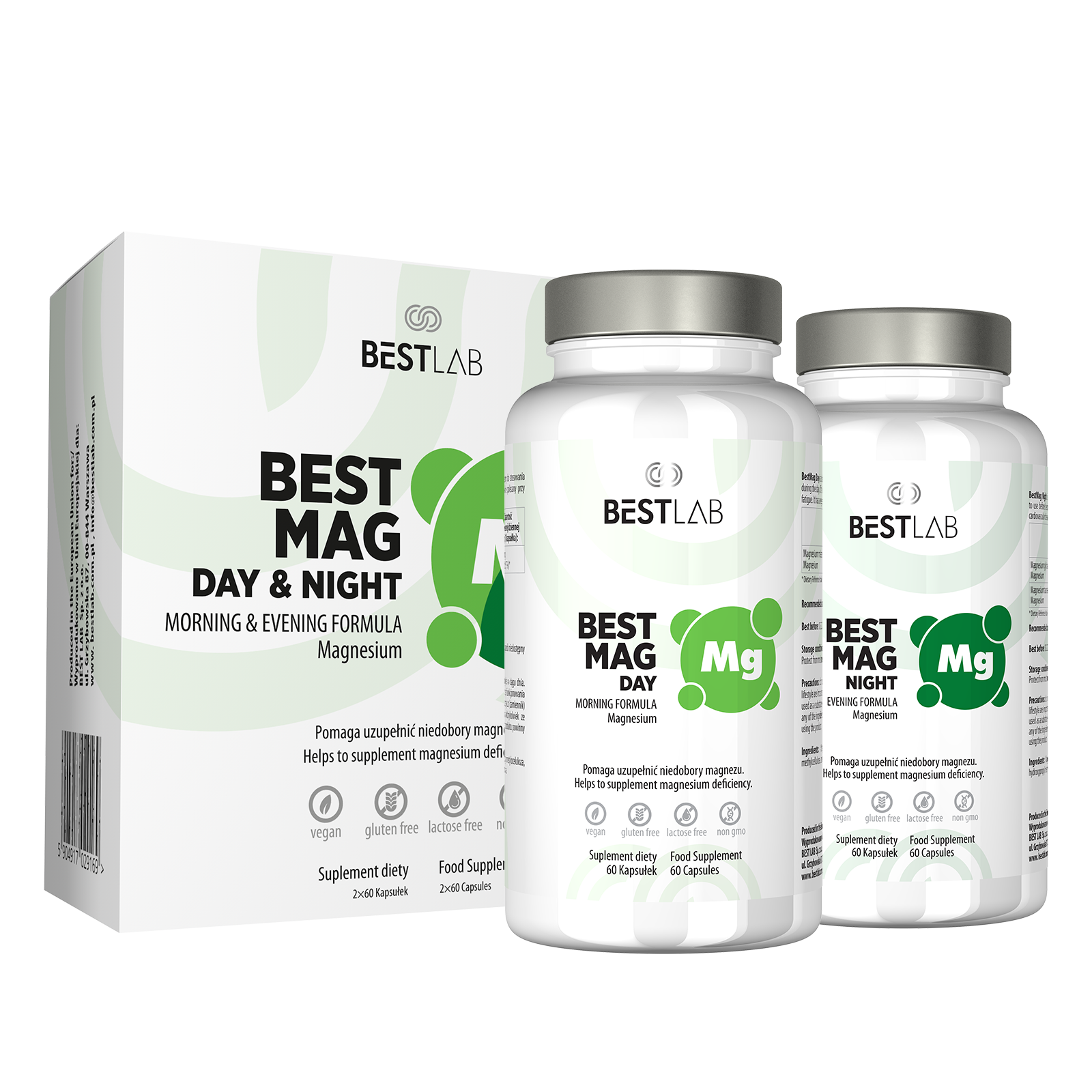
BestMag Day&Night 2×60 caps
£35.8
View Product →