
Mornings on the run, pressure for results, and difficult conversations at work, silence after a stormy argument with a loved one… In daily life, we increasingly experience stress – both short-term and chronic. Long-term tension affects not only our well-being, but also our mental and physical health, sleep quality, and immunity.
Contents
- What is stress and how does it affect our lives?
- Ways to cope with stress
- Best herbs for nerves and stress – what’s worth trying?
- How does ashwagandha affect stress? Scientific evidence and application
- Stress-reducing supplements – user and expert opinions
- Is it worth taking magnesium for nerves? The role of magnesium in stress reduction
- Stress supplements – a comprehensive offer for mental health
- Not just psychobiotics – a modern approach to stress and brain health
- Supplements for the nervous system – support for emotional balance
- FAQ – frequently asked questions
What exactly is stress, how does it affect us, and how can we deal with it? Various methods come to the rescue, including supplements that support the nervous system and help better cope with tension. Let’s take a closer look at which stress supplements are worth trying and how they work on our body.
What is stress and how does it affect our lives?
To talk about how to deal with stress, it’s worth knowing what it actually is and how it affects us in the short and long term. Stress is a natural reaction of the body to situations requiring adaptation to changing environmental conditions. A stressful situation triggers a series of physiological reactions in the body, such as increased heart rate, breathing, pupil dilation, increased blood clotting, and metabolic changes that are supposed to prepare the body for fight or flight. This adaptive reaction is beneficial in the short term, but chronic stress leads to body exhaustion, weakened immunity, sleep disturbances, concentration problems, and can cause psychosomatic symptoms such as abdominal pain or cardiovascular problems. In the human body, everything is connected, which is why stress is felt throughout the entire body. Scientists point out that stress is one of the key factors causing psychosomatic diseases, where somatic symptoms result from mental and emotional tension.
Ways to cope with stress
Effective stress management is based on a combination of relaxation techniques, a healthy lifestyle, and psychological support. It’s worth knowing 7 proven methods that will help us regain balance in a stressful situation and use them when needed. Here they are:
- Method 1: Movement – reduces tension by releasing endorphins.
- Method 2: 4-7-8 Breathing – calms the nervous system in a few minutes.
- Method 3: Diverse and balanced diet – rich in minerals and herbs supporting brain function.
- Method 4: Dietary supplements – especially those that meet the demand for vitamins and minerals
- Method 5: Mindfulness – focusing on “here and now” reduces anxiety.
- Method 6: Sleep and regeneration – 7-8 hours of sleep restores hormonal balance.
- Method 7: Task planning – organizes duties, preventing overload.
Best herbs for nerves and stress – what’s worth trying?
Herbal medicine has been an important element in supporting emotional balance for centuries. Among the most recommended plants for stress relief are:
- Ashwagandha – an adaptogen that helps the body adapt to stress,
- Lemon balm – has a calming effect, aids sleep, and reduces tension.
- Lavender – used in aromatherapy and supplements, it soothes anxiety and promotes relaxation.
- St. John’s wort – supports mood, especially in mild seasonal depression, but can interact with medications – should be used with caution.
- Rhodiola rosea – An adaptogen that increases resistance to stress, improves cognitive functions, and mood.
- Valerian (Kozłek lekarski) – Lowers central nervous system activity, facilitates falling asleep, relieves anxiety.
- Chamomile – Relieves nervous tension, has anti-inflammatory properties, reduces stress-related headaches.
The above herbs can be used in the form of infusions, capsules, or extracts. To truly feel the effectiveness of their action, systematic intake is important. Before using St. John’s wort and valerian, it is advisable to additionally consult a doctor, as they may interact with medications.
How does ashwagandha affect stress? Scientific evidence and application
Ashwagandha (also known as Withania somnifera) is one of the most effective adaptogens. If you know a little about this plant, you’re not wondering if ashwagandha works for stress, but you might be interested in how it affects the human body. Its effectiveness has been confirmed in many clinical studies. These show that regular intake of ashwagandha:
- lowers cortisol levels (the stress hormone),
- improves sleep quality,
- increases mental resilience,
- reduces anxiety symptoms,
- supports neurotransmitters – modulates GABA and serotonin activity, reducing anxiety and improving mood,
- improves cognitive functions – supports memory, concentration, and learning ability.
A study published in the Journal of Clinical Psychiatry showed that individuals taking 300 mg of ashwagandha extract for 8 weeks experienced significantly less stress compared to the placebo group. Stress supplements containing ashwagandha are distinguished by their strongest action – precisely due to clinically confirmed reduction of cortisol and stress.
Stress-reducing supplements – user and expert opinions
When choosing supplements, we often rely on the opinions of other users and expert recommendations that confirm the effectiveness of the ingredients. This is completely natural, which is why the most frequently recommended stress-reducing supplements include those containing ingredients such as:
- ashwagandha – valued for its natural effect and non-addictive nature.
- B vitamin and magnesium complexes – support the functioning of the nervous system.
- L-theanine – an amino acid from green tea that increases alpha waves in the brain, promoting relaxation without drowsiness.
- 5-HTP and tryptophan – serotonin precursors that improve mood.
User opinions often emphasize improved sleep, greater calmness, and easier coping with daily challenges. Experts emphasize that the effectiveness of supplements depends on the quality of the preparation and regularity of use.
Is it worth taking magnesium for nerves? The role of magnesium in stress reduction
Constant nervousness, irritability, and difficulty controlling nerves are often associated with magnesium deficiency – a key element for the balance of the nervous system. Magnesium regulates the action of neurotransmitters (e.g., GABA and serotonin), inhibits excessive cortisol secretion, and stabilizes nerve cell membranes, which directly translates into a reduction in tension and an improvement in mental resilience. Its supplementation is especially recommended for people exposed to chronic stress, in whom symptoms such as muscle cramps, sleep problems, or heart palpitations indicate an increased need for this element in the body.
Studies show that magnesium supplementation can effectively reduce stress levels, especially if taken in a well-absorbed form – e.g., magnesium citrate or lactate. It is also worth paying attention to the presence of vitamin B6, which increases its bioavailability (the percentage of a substance that enters the bloodstream and is available to the body).
Stress supplements – a comprehensive offer for mental health
Before choosing a stress supplement, we should first determine our needs and familiarize ourselves with its composition – standardized extracts (e.g., ashwagandha) and clinically confirmed effectiveness are key. It is also important to pay attention to the form of the ingredients (e.g., magnesium in the form of citrate with vitamin B6), and it is worth considering a consultation with a doctor or dietitian to avoid interactions and select the optimal dose. By browsing the available in our offer, you will find, among others:
- herbs and adaptogens (e.g., ashwagandha, rhodiola),
- magnesium with B vitamins,
- preparations with lemon balm and lavender,
- products supporting sleep and calming.
Not just psychobiotics – a modern approach to stress and brain health
More and more research confirms the link between gut health and mental health. Psychobiotics are a special group of probiotics that:
- improve mood,
- reduce anxiety and depressive symptoms,
- support the balance of the gut-brain axis.
However, it is worth being aware that psychobiotics are not the only products worth considering in the fight against stress. It is good to ensure adequate levels of magnesium and vitamin D, as their deficiency also affects us in a stressful way. One of the preparations available in the BEST LAB offer that is worth getting acquainted with is BestBiotic – an innovative probiotic preparation that contains ten strains of bacteria with confirmed action.
Supplements for the nervous system – support for emotional balance
Long-term stress can lead to exhaustion of the nervous system. For this reason, it is worth taking supplements that support the functioning of this part of our body. These include:
- B vitamins – especially B1, B6, B12 – affect brain function and energy levels.
- Omega-3 (DHA, EPA) – support brain function, reduce the risk of depression.
- L-theanine and GABA – support calming and improve sleep quality.
Check out the full BEST LAB offer, including , to choose a preparation tailored to your needs.
FAQ – frequently asked questions
How long do you need to take stress supplements to see results?
Effects often appear after 2-4 weeks of regular use, depending on the type of supplement.
Can supplements be combined with psychological therapy?
Yes, supplementation can be a valuable complement to therapy – however, it is always worth consulting a specialist.
Can supplements be addictive?
Most natural supplements (e.g., adaptogens, magnesium, vitamins) do not cause addiction, unlike some tranquilizers.
What vitamins and minerals are most often recommended for stress?
B vitamins, magnesium, vitamin D, zinc, and adaptogens such as ashwagandha or rhodiola are most often recommended because they support the nervous system and help regulate the body’s response to stress.
Can stress supplements cause side effects?
Most natural supplements are well tolerated, but mild side effects such as stomach aches or drowsiness may occur. Before starting supplementation, it is advisable to consult a doctor, especially if you are taking other medications.
Are stress supplements suitable for everyone?
Not everyone should take stress supplements. Chronically ill people, pregnant or breastfeeding women, and children should consult a doctor before starting supplementation to choose the appropriate preparation and rule out contraindications.
Sources:
1. Krzysztof Brzozowski, Marzanna Herzig, Biological and psychological regeneration of sports managers, Warsaw 2001.
2. Philip G. Zimbardo, Robert L. Johnson, Vivian McCann, Psychology: key concepts. 5, Man and his environment; scientific editing by Maria Materska; translation by Józef Radzicki. – Warsaw 2010.
3. Jan Strelau, Personality and extreme stress scientific ed. – Gdańsk: Gdańskie Wydaw. Psychologiczne, 2004.
4. Kazimierz Wrześniewski, Dorota Włodarczyk, Ischemic heart disease – Gdańskie Wydaw. Psychologiczne, 2004. (Clinical Psychology)
5. Ewa Kempisty-Jeznach, People sick from stress, 2021
6. Anders Hansen, A healthy mind in a healthy body, 2021
Also check
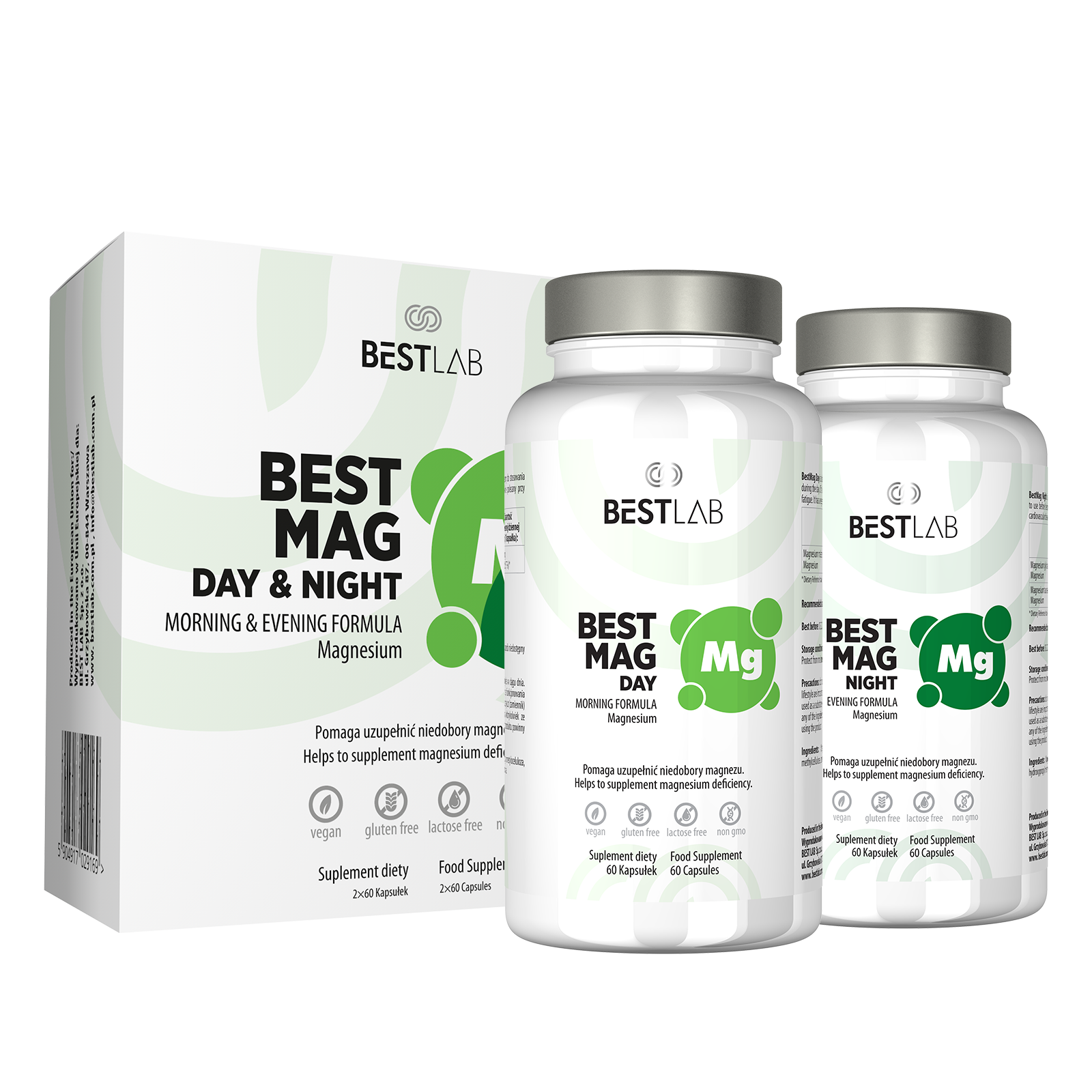
BestMag Day&Night 2×60 caps
£35.8
View Product →