
Magnesium is one of the most important elements necessary for the proper functioning of the human body. Its role is extremely broad – it participates in over 300 enzymatic processes, affects the work of muscles, the nervous system, and the heart, and also takes part in protein synthesis, energy production, and maintaining electrolyte balance.
Contents
- Magnesium and stress – does magnesium help with stress?
- The best magnesium for stress – what kind?
- Does magnesium help with cramps and other deficiency symptoms?
- What magnesium is best? An overview of forms and bioavailability
- Magnesium in tablets or powder – what to choose?
- Is it worth taking magnesium daily? Safety and dosage
- Magnesium supplements and stress supplements – how to combine them?
- BestMag – a modern magnesium supplement
Magnesium deficiency can lead to a number of unpleasant symptoms, such as chronic fatigue, irritability, sleep disturbances, muscle cramps, and even heart arrhythmia.
Modern lifestyle, stress, a diet poor in vegetables and whole-grain products, as well as excessive consumption of coffee or alcohol, contribute to deficiencies of this element. Therefore, more and more people are reaching for magnesium supplements, wanting to replenish its levels and improve their daily well-being. But how do you know which magnesium is best and how to choose the right preparation? Let’s look for answers to this question.
Magnesium and stress – does magnesium help with stress?
Many of us experience chronic stress, which negatively affects mental and physical health. In this context, the question often arises: does magnesium help with stress? Scientific research confirms that magnesium plays a key role in regulating the nervous system. It participates in the transmission of nerve impulses, influences the production of neurotransmitters, and also helps maintain mental balance.
Magnesium deficiency can exacerbate stress symptoms such as anxiety, irritability, difficulty concentrating, or sleep disturbances. In stressful situations, the body uses more magnesium, which can lead to its faster depletion. Therefore, stress supplements often contain magnesium, which helps alleviate nervous tension and support mental resilience.
It is worth noting that the best magnesium for stress is one that is highly absorbable and well-tolerated by the body. When choosing magnesium supplements, it is worth paying attention to the chemical form of magnesium and the presence of additional ingredients, such as vitamin B6, which supports the absorption of this element.
The best magnesium for stress – what kind?
When choosing the best magnesium for stress, it’s worth paying attention to several key aspects. First and foremost, the chemical form of magnesium is important, as it determines its bioavailability, i.e., the degree of absorption by the body. Many different forms of magnesium are available on the market, such as magnesium oxide, citrate, lactate, chloride, aspartate, or taurate. They differ not only in absorbability but also in their effect on the nervous and muscular systems.
Magnesium citrate is one of the best-absorbed forms, often recommended for people struggling with stress and nervous tension. Magnesium lactate also boasts good bioavailability and a gentle effect on the digestive tract. Magnesium oxide, on the other hand, although it contains a lot of the element, is poorly absorbed and can cause stomach discomfort. It is also worth paying attention to magnesium supplements enriched with B vitamins, especially vitamin B6, which supports the action of magnesium on the nervous system.
Does magnesium help with cramps and other deficiency symptoms?
One of the most common symptoms of magnesium deficiency is painful muscle cramps, especially in the calves, which often appear at night or after physical exertion. The question “does magnesium help with cramps?” arises very often both in doctors’ offices and on internet forums. The answer is unequivocal – yes, magnesium supplementation can significantly reduce the frequency and intensity of muscle cramps.
Magnesium participates in neuromuscular conduction, regulates muscle tension, and prevents excessive excitation of muscle cells. Physically active people, athletes, pregnant women, and the elderly are particularly susceptible to magnesium deficiencies and associated cramps.
However, it is worth remembering that the effectiveness of supplementation depends on the regularity of use and the choice of the appropriate form of magnesium. Magnesium with high bioavailability, taken daily in recommended doses, brings the best results – in this way, it can become effective support in fighting cramps and other deficiency symptoms.
What magnesium is best? An overview of forms and bioavailability
Choosing the best magnesium is not easy, as many different preparations are available on the market. The key criterion should be bioavailability, i.e., the body’s ability to absorb magnesium from a given chemical form. The most common forms of magnesium are:
- Magnesium citrate – very well absorbed, gentle on the stomach, recommended for problems with stress, cramps, and fatigue.
- Magnesium lactate – also characterized by high bioavailability, often used in supplements for active people.
- Magnesium chloride – easily soluble in water, quickly absorbed, can also be used externally.
- Magnesium oxide – contains a lot of magnesium, but is poorly absorbed and can cause stomach discomfort.
- Magnesium aspartate and taurate – recommended for people with cardiological problems, support heart and nervous system function.
What magnesium is best? The answer depends on individual needs, health status, and preferences. For people struggling with stress, fatigue, or muscle cramps, preparations containing magnesium citrate or lactate will be the best choice. It is also worth paying attention to the presence of additional ingredients, such as B vitamins, which enhance the action of magnesium.
Magnesium in tablets or powder – what to choose?
Another dilemma faced by people planning supplementation is the choice of the preparation form: magnesium in tablets or powder? Each of these forms has its advantages and can be adapted to the individual needs of the user.
Magnesium in tablets is the most convenient form of supplementation. Tablets are easy to swallow, precisely dosed, and can be taken anywhere. This is an ideal solution for busy people who value convenience and simplicity of use. in tablets are available in various doses and forms, allowing the preparation to be tailored to one’s needs.
Magnesium in powder is an option for people who have difficulty swallowing tablets or want to regulate the supplement dose themselves. The powder can be easily dissolved in water or juice, making it easier to take, especially for children and the elderly. However, it is worth remembering that some forms of powdered magnesium may have a specific taste that not everyone finds appealing.
The choice between magnesium in tablets or powder therefore depends on individual preferences, ease of use, and any medical indications. The most important thing is that the preparation is of high quality and contains a well-absorbed form of magnesium.
Is it worth taking magnesium daily? Safety and dosage
Many people wonder if daily supplementation is safe. Magnesium is an essential element for life, and its daily requirement depends on age, gender, physical activity, and health status. The average daily requirement for magnesium for adults is about 300-400 mg.
Daily magnesium supplementation is especially indicated for people at risk of deficiency – physically active people, pregnant women, the elderly, and those who live in constant stress or follow a magnesium-poor diet. Magnesium supplements can be safely used for an extended period, provided that the recommended doses are adhered to.
However, it is worth remembering that an excess of magnesium can lead to undesirable effects, such as diarrhea or electrolyte disturbances. Therefore, always follow the manufacturer’s recommendations and do not exceed the recommended dose. In the case of chronic diseases or taking other medications, it is advisable to consult a doctor about supplementation.
Magnesium supplements and stress supplements – how to combine them?
Many magnesium supplements and stress supplements are available on the market, often containing additional ingredients supporting the nervous system, such as B vitamins, adaptogens, or plant extracts. It is important to know how to combine these preparations to achieve the best effects and avoid the risk of overdose.
often contain magnesium combined with vitamin B6, ashwagandha extract, lemon balm, or L-theanine. Such a combination of ingredients works synergistically, strengthening resistance to stress, improving concentration, and facilitating falling asleep. If you decide to use several supplements simultaneously, it is worth paying attention to the total amount of magnesium so as not to exceed the recommended dose.
In our offer, you will find both high-quality magnesium supplements and specialized stress supplements that can be used together, provided moderation is maintained and the manufacturer’s recommendations are followed. In case of doubt, it is advisable to consult a pharmacist or doctor who will help select the appropriate supplementation for individual needs.
BestMag – a modern magnesium supplement
Among the many preparations available on the market, it is worth paying attention to BestMag – a modern magnesium supplement, available in the BEST LAB offer. BestMag is a preparation that combines high-quality ingredients with a modern formula, ensuring optimal absorption and effectiveness.
contains a well-absorbed form of magnesium, enriched with vitamin B6, which supports the action of magnesium on the nervous and muscular systems. This preparation is recommended for people exposed to stress, fatigue, muscle cramps, and everyone who wants to ensure the proper functioning of the body.
Thanks to the convenient tablet form, BestMag is easy to use and can be taken daily as part of a healthy lifestyle. This supplement was developed for active people, those working mentally, athletes, and everyone who wants to improve their resistance to stress and take care of their mental health.
Sources:
- Boyle, N. B., Lawton, C., & Dye, L. (2017). The effects of magnesium supplementation on subjective anxiety and stress-A systematic review. Nutrients, 9(5), 429.
- Tarleton, E. K., & Littenberg, B. (2015). Magnesium intake and depression in adults. Journal of the American Board of Family Medicine, 28(2), 249-256.
- Maria Żebrowska. Weronika Krzynówek. The role of magnesium in the proper functioning of the human body. Aptekarz Polski 2020.
- Julie Morris. “Smart Plants. How to use natural nootropics to improve thinking, concentration and memory.” Świat Książki 2020.
- Maria Iskra, Beata Krasińska, Andrzej Tykarski. Magnesium – physiological role, clinical significance of deficiency in hypertension and its complications, and possibilities of supplementation in the human body. Via Medica 2013
- Marzena Żylińska. Neurodidactics: brain-friendly teaching and learning, Nicolaus Copernicus University Scientific Publishing House, Toruń, 2013 p. 3
- Anna Jabłecka, Katarzyna Korzeniowska, Anna Skołuda, Artur Cieślewicz, Magnesium preparations. Farmacja Współczesna 2011
- Halina Bojarowicz, Paulina Dźwigulska. Dietary supplements. Part II. Selected ingredients of dietary supplements and their purpose. Hygeia Public Health 2012
Also check
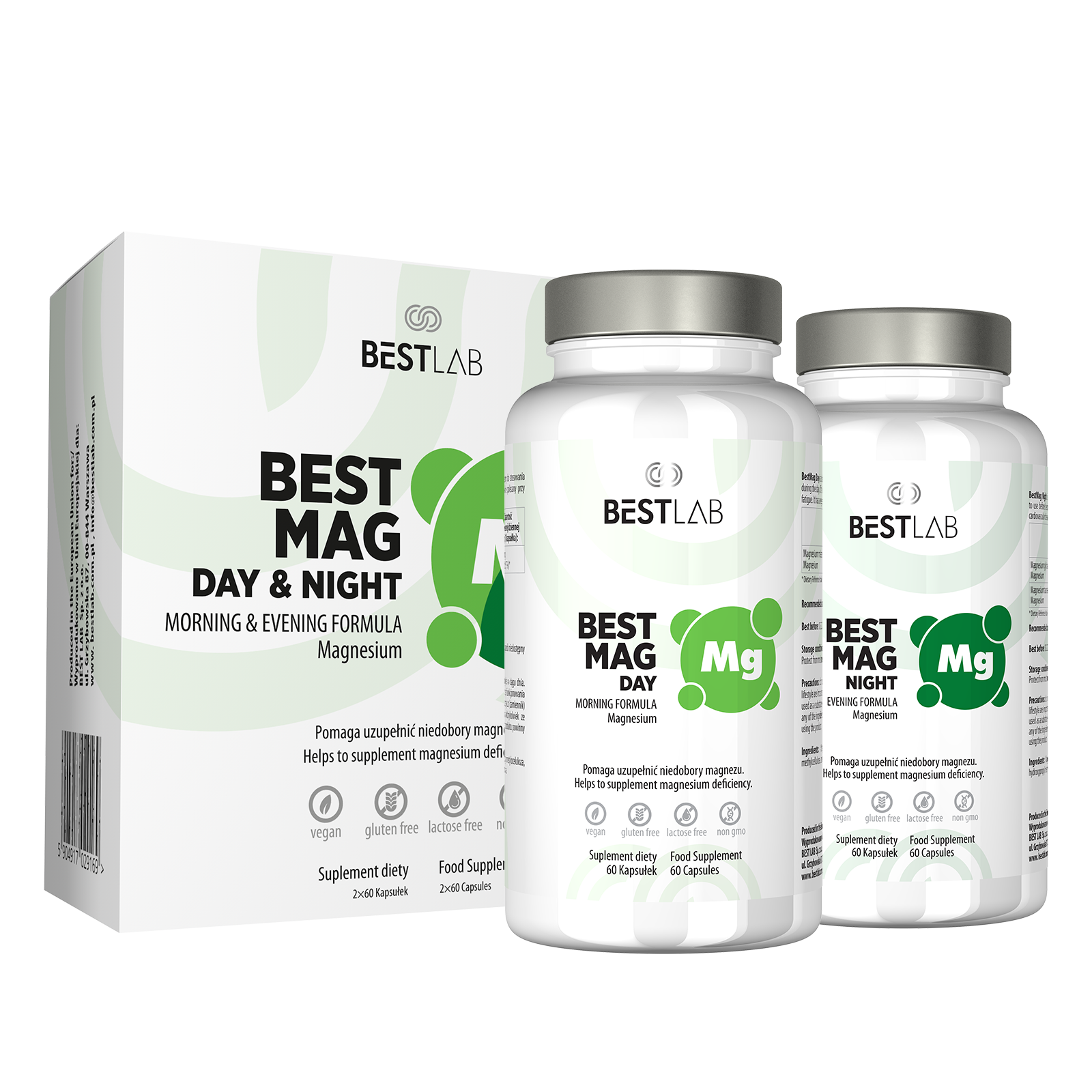
BestMag Day&Night 2×60 caps
£35.8
View Product →