
The thyroid is a small butterfly-shaped gland that plays a crucial role in regulating metabolic processes, energy levels, and overall body function.
Contents
- Why are thyroid tests so important?
- The most important thyroid tests – what you should know?
- 1. TSH – thyroid-stimulating hormone
- 2. FT3 and FT4 – free thyroid hormones
- 3. Anti-TPO – thyroid peroxidase antibodies
- 4. Anti-TG – antithyroglobulin antibodies
- 5. TRAb – TSH receptor antibodies
- 6. Thyroid ultrasound – imaging diagnostics
- How often should thyroid tests be performed?
- Thyroid disease prevention – how to support the health of this organ?
- Hypothyroidism – what supplements are best to take?
- Summary – why are thyroid tests crucial for health?
Thyroid diseases, however, are very common, and their symptoms are often mistaken for other ailments, such as chronic fatigue, weight fluctuations, or skin problems. Regular thyroid examinations are crucial to detect abnormalities in time and properly care for one’s health.
In this article, we explain which thyroid tests are most important, why a TSH test alone is not enough, and how to comprehensively monitor thyroid function.
Why are thyroid tests so important?
Thyroid diseases can develop slowly and asymptomatically, which is why regular monitoring of its function is an important element of health prevention. Many people do not realize that the thyroid has a huge impact on metabolism, hormonal functions, and the immune system. Improper functioning of this gland can lead to problems such as hypothyroidism, hyperthyroidism, Hashimoto’s disease, or Graves’ disease.
To comprehensively assess the condition of the thyroid, it is worth regularly performing blood tests, as well as imaging diagnostics, such as a thyroid ultrasound. Only through this can a complete picture of the health of this organ be obtained.
The most important thyroid tests – what you should know?
1. TSH – thyroid-stimulating hormone
The TSH test is the absolute basis of thyroid diagnostics. TSH is a hormone produced by the pituitary gland, which controls thyroid function, influencing the secretion of FT3 and FT4 hormones.
- Elevated TSH: may indicate hypothyroidism. The body tries to force the thyroid to be more active, leading to an increase in TSH levels.
- Decreased TSH: may suggest hyperthyroidism, when the gland produces too many hormones.
However, a TSH test alone is not enough to make a full diagnosis. Therefore, diagnostics should always be extended to include FT3 and FT4 tests.
2. FT3 and FT4 – free thyroid hormones
FT3 (free triiodothyronine) and FT4 (free thyroxine) are active thyroid hormones that regulate metabolism, body temperature, and energy levels. Their levels provide key information about thyroid function.
- FT4: is the main hormone produced by the thyroid, which is converted into FT3.
- FT3: is a more active form of the hormone that acts directly on the body’s cells.
Abnormal levels of FT3 and FT4 may indicate hypothyroidism, hyperthyroidism, or other thyroid disorders.
3. Anti-TPO – thyroid peroxidase antibodies
Anti-TPO is a test that helps detect autoimmune thyroid diseases, such as Hashimoto’s. An elevated level of anti-TPO antibodies indicates an attack by the immune system on the thyroid, which can lead to chronic inflammation and hypothyroidism.
If you suspect Hashimoto’s disease, the anti-TPO test is one of the most important diagnostic steps.
4. Anti-TG – antithyroglobulin antibodies
Testing for Anti-TG antibodies helps identify other forms of autoimmune thyroiditis. Similar to anti-TPO, their presence indicates an autoimmune reaction, which can damage the thyroid and disrupt its function.
5. TRAb – TSH receptor antibodies
TRAb antibodies are crucial in the diagnosis of Graves’ disease, which leads to hyperthyroidism. TRAb stimulate TSH receptors on the thyroid, causing excessive hormone production.
If you suspect hyperthyroidism, this test is essential to confirm the diagnosis.
6. Thyroid ultrasound – imaging diagnostics
Thyroid ultrasound is a non-invasive examination that allows for the assessment of the structure, size, and any changes in the thyroid. Thanks to ultrasound, nodules, cysts, or goiter can be detected, which may require further diagnostics.
Regular ultrasound, performed once a year, helps monitor the thyroid’s condition and detect potential problems at an early stage.
How often should thyroid tests be performed?
For healthy individuals, it is recommended to check the thyroid’s condition every 1-2 years. However, if you have symptoms such as chronic fatigue, weight fluctuations, concentration problems, or hair loss, you should perform thyroid tests as soon as possible.
People with already diagnosed thyroid diseases should regularly monitor TSH, FT3, FT4, and antibodies to assess the effectiveness of treatment.
Thyroid disease prevention – how to support the health of this organ?
In addition to regular examinations, it is worth maintaining a healthy lifestyle and a diet rich in nutrients that support the thyroid. Particularly important are:
- Selenium and iodine, which support thyroid hormone production.
- Zinc and B vitamins, which support the functioning of the endocrine system.
- Avoiding stress and getting enough sleep, which prevent thyroid overload.
Caring for thyroid health involves not only regular examinations and an appropriate diet, but also proper supplementation. Hypothyroidism, Hashimoto’s, and other disorders of this gland’s function can cause fatigue, weight problems, or a worsening of well-being. In such cases, supporting the thyroid by providing it with essential nutrients becomes crucial.
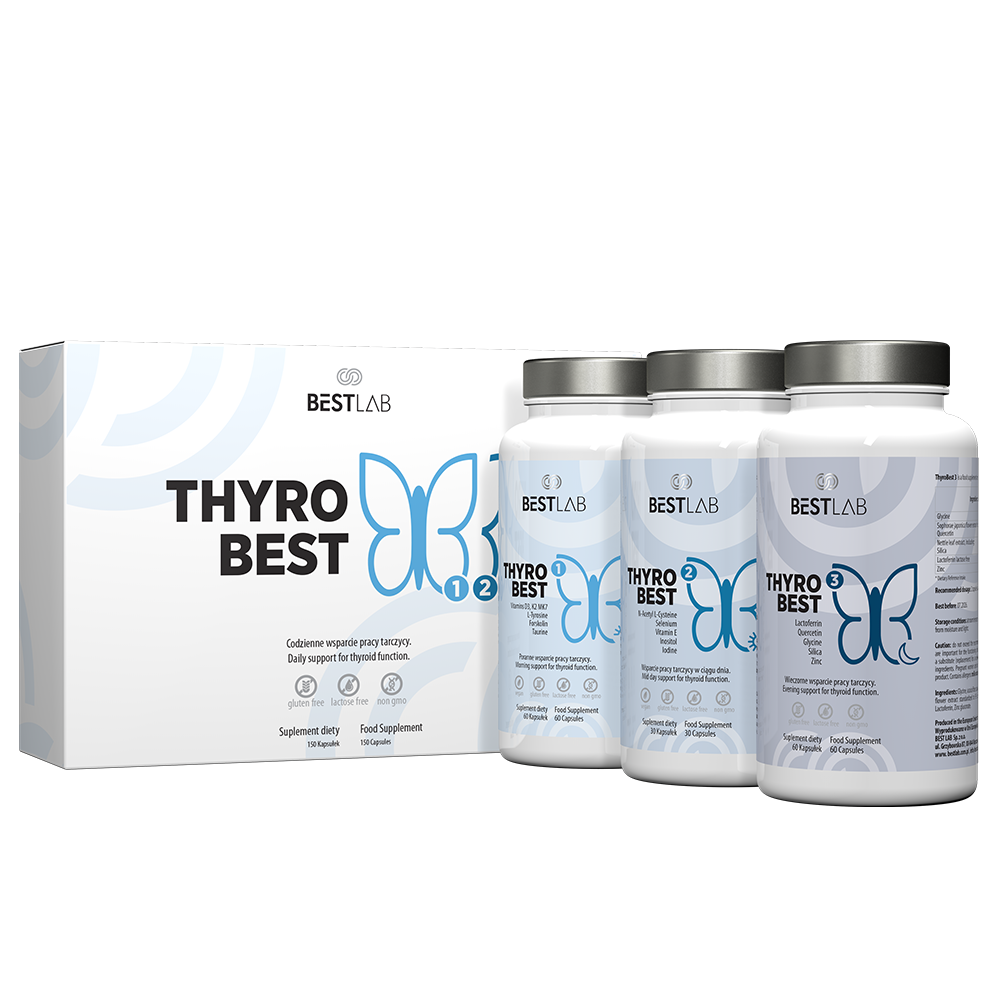
One of the most effective supplements dedicated to thyroid support is , which has been specially developed for individuals struggling with hypothyroidism and autoimmune diseases such as Hashimoto’s.
Hypothyroidism – what supplements are best to take?
To support thyroid function, it is worth reaching for supplements that provide key ingredients supporting its operation. ThyroBest contains iodine, essential for hormone production, as well as selenium and zinc, which play a protective role and support the regeneration of thyroid cells. Thanks to the presence of L-tyrosine and inositol, ThyroBest supplementation helps maintain hormonal balance and energy metabolism, which translates into improved well-being and stable energy levels. Regular use of ThyroBest is a way to effectively support the thyroid in its daily functioning in cases of hypothyroidism.
What distinguishes ThyroBest is its innovative division into three formulas adapted to the body’s natural circadian rhythm.
- Morning capsule: supports hormone production and accelerates metabolism, helping to start the day with energy.
- Day capsule: stabilizes thyroid functions throughout the day, ensuring optimal body performance.
- Evening capsule: supports regeneration and calms the body, preparing the thyroid for nighttime regeneration.
Summary – why are thyroid tests crucial for health?
Regular thyroid tests, such as TSH, FT3, FT4, anti-TPO, and ultrasound, are indispensable for maintaining good health and early detection of diseases. The thyroid is a small gland of immense importance, so it is worth paying attention to its function and not ignoring the first symptoms of health problems.
Also check out
ThyroBest – 3-Step Thyroid Support
£56
View Product →