
Collagen in cosmetics affects the skin by creating a protective layer on its surface, which helps retain moisture and improves its hydration. As a result, the skin becomes more elastic and smooth. Collagen in cosmetics can support the regeneration of the epidermis, which contributes to improving its appearance. It is worth remembering, however, that collagen in cosmetics works mainly on the surface of the skin and does not penetrate into deeper layers. Therefore, its impact on the skin is limited to external effects.
Contents
- Collagen in cosmetics – how does it work on the skin’s surface?
- Collagen in supplements – action from within
- Which form of collagen is more effective?
- Can collagen from cosmetics and supplements be combined?
- How to choose the right product for your skin type?
- Hydrolyzed collagen in cosmetics – facts and myths
- Why collagen in cream doesn’t always work?
- What effects does supplementation combined with skincare provide?
- FAQ
- Does collagen in cosmetics penetrate into deeper layers of the skin?
- What are the benefits of using collagen in supplements?
- Can collagen from cosmetics and supplements be combined?
- How to choose the right collagen product for your skin type?
- Is hydrolyzed collagen in cosmetics effective?
- What are the differences between collagen in cosmetics and supplements?
Are you wondering what works better for your skin: collagen in cosmetics or in supplements? In our article, you will discover which form of collagen brings better results and what benefits can be achieved by combining these two approaches.
From the article, you will learn:
- What are the basic differences between collagen in cosmetics and supplements.
- How collagen externally affects the skin in cosmetics.
- Why collagen supplementation supports health from within.
- About the possibilities of combining various forms of collagen.
- How to choose collagen products for different skin types.
- What hydrolyzed collagen is and how it works.
- What facts and myths circulate about collagen in cosmetics.
- How to comprehensively care for your skin using collagen.
Collagen in cosmetics – how does it work on the skin’s surface?
Collagen in cosmetics affects the skin by creating a protective layer on its surface, which helps retain moisture and improves its hydration. As a result, the skin becomes more elastic and smooth. Collagen in cosmetics can support the regeneration of the epidermis, which contributes to improving its appearance. It is worth remembering, however, that collagen in cosmetics works mainly on the surface of the skin and does not penetrate into deeper layers. Therefore, its impact on the skin is limited to external effects.
The use of collagen in cosmetics can be beneficial for individuals seeking a quick improvement in skin appearance. Regular application of such products can lead to increased skin hydration and elasticity. However, for long-lasting effects, it is worth considering combining external care with collagen in supplements. Such a comprehensive approach can bring better results in improving skin condition.
Collagen in supplements – action from within
Collagen in supplements provides the body with essential amino acids, which are building blocks for its own collagen. Regular intake of such preparations can support the regeneration of connective tissue, which translates into improved skin elasticity and joint and bone health. The action of collagen from within also includes strengthening hair and nails, contributing to their better condition.
Collagen supplementation can be particularly beneficial for physically active people and those who struggle with joint problems. It is worth remembering that the effectiveness of supplementation depends on the regularity of use and the quality of the preparation. Additionally, the presence of vitamin C in the diet or supplement supports collagen synthesis, which can enhance the positive effects of its intake.
Which form of collagen is more effective?
The choice of the appropriate form of collagen depends on the desired effects and individual needs. Below is a comparison of collagen in cosmetics and supplements in various situations:
- Improved skin hydration and elasticity: Collagen in cosmetics creates a protective layer on the skin’s surface, which helps retain moisture, leading to increased skin hydration and elasticity.
- Strengthening skin structure from within: Collagen in supplements provides the body with amino acids necessary for the synthesis of its own collagen, which can contribute to improving skin structure from within.
- Support for joints and bones: Collagen supplementation can support joint and bone health, which is particularly important for physically active and older individuals.
- Immediate vs. long-term effects: Collagen in cosmetics can provide quick visual effects, such as skin smoothing, while supplements work long-term, improving skin condition from within.
In summary, the effectiveness of collagen depends on the form of its application and the desired results. For comprehensive effects, it is worth considering combining both forms of collagen, adapting them to individual needs.
Can collagen from cosmetics and supplements be combined?
Combining collagen from cosmetics and supplements can bring benefits for skin condition. Such a combination allows for action both externally and internally, which can lead to better results. Below are the potential benefits of such a combination:
- Improved skin hydration: Collagen in cosmetics creates a protective layer on the skin’s surface, which helps retain moisture, while supplementation supports hydration from within.
- Increased skin elasticity: The use of collagen in cosmetics can improve skin elasticity externally, and supplementation provides amino acids necessary for collagen synthesis, which affects elasticity from within.
- Reduction in wrinkle visibility: Combining both forms of collagen can contribute to reducing the visibility of wrinkles by acting on different levels of the skin.
- Strengthening skin structure: Collagen supplementation supports the regeneration of connective tissue, and collagen in cosmetics can aid in epidermal reconstruction.
It is worth remembering that the effectiveness of such a combination depends on the regularity of use and the quality of the products used. Additionally, the presence of vitamin C in the diet supports collagen synthesis, which can enhance the positive effects of its intake.
How to choose the right product for your skin type?
The selection of collagen products should be tailored to individual skin type to achieve optimal results. Collagen in cosmetics works mainly on the skin’s surface, improving its hydration and elasticity. Collagen supplementation supports skin regeneration from within, providing essential amino acids for the synthesis of the body’s own collagen.
When choosing the right product, it is worth considering the following aspects:
- Skin type: For dry and dehydrated skin, collagen in cosmetics can help retain moisture. People with mature skin can benefit from supplementation to support skin elasticity from within.
- Form of collagen: Fish collagen is often considered the most absorbable and effective in improving skin appearance.
- Additional ingredients: The presence of vitamin C in collagen products supports collagen synthesis, which can enhance the positive effects of its use.
Regular use of properly selected collagen products, both in the form of cosmetics and supplements, can contribute to improving the condition of the skin, hair, and nails.
Hydrolyzed collagen in cosmetics – facts and myths
Hydrolyzed collagen in cosmetics is often promoted as an effective ingredient for improving skin condition. However, its action is mainly limited to the superficial layers of the epidermis, where it forms a protective layer, helping to retain moisture and improve skin hydration. Due to its large molecular weight, hydrolyzed collagen does not penetrate into deeper skin layers, which limits its effectiveness in stimulating endogenous collagen production.
Myths about collagen suggest that the use of cosmetics with hydrolyzed collagen can significantly reduce wrinkles and improve skin elasticity. In reality, these effects are short-lived and result mainly from moisturizing action. For long-term results in improving skin structure, it is worth considering collagen supplementation, which provides the body with essential amino acids for the synthesis of its own collagen.
Why collagen in cream doesn’t always work?
Collagen in cream is a popular ingredient in anti-aging cosmetics, but its effectiveness is often limited. This is mainly due to the large size of collagen molecules, which are unable to penetrate the epidermal barrier. Instead of reaching deeper layers of the skin where rebuilding processes occur, they remain on its surface, creating only a moisturizing and smoothing film. While such action may temporarily improve skin appearance, it does not directly affect collagen production in the dermis. To achieve real effects, it is better to opt for products containing collagen peptides, which stimulate fibroblasts to synthesize new collagen, or to combine skincare with oral supplementation.
What effects does supplementation combined with skincare provide?
Combining collagen supplementation with external skincare brings significantly better results than using one of these methods separately. Supplementation works from within, providing the body with collagen peptides and amino acids necessary for rebuilding skin fibers, joints, and tendons. Meanwhile, external skincare – using creams, serums, and masks containing active ingredients such as vitamin C, retinol, hyaluronic acid, or peptides – supports epidermal regeneration and retains moisture in the skin. Such a synergistic treatment improves skin elasticity, hydration, and firmness, and wrinkles become shallower. Effects are visible after just a few weeks of regular use, and the skin gains a healthy, radiant appearance. Long-term, the combination of supplementation and skincare supports natural collagen production, slows down the aging process, and strengthens the skin’s protective barrier, providing comprehensive regeneration from within and without.
FAQ
Collagen in cosmetics works mainly on the surface of the skin, forming a protective layer that helps retain moisture. Due to its large molecular weight, it does not penetrate into deeper layers of the skin.
Collagen supplementation provides the body with amino acids necessary for the synthesis of its own collagen, which can improve skin elasticity, strengthen hair and nails, and support joint and bone health.
Yes, combining collagen from cosmetics and supplements can bring comprehensive benefits, acting both externally and internally, which can lead to better results in improving skin condition.
The choice of a collagen product should be tailored to the individual needs of the skin. For dry skin, cosmetics with collagen can help with hydration, while supplementation can support skin elasticity from within.
Hydrolyzed collagen in cosmetics works mainly on the surface of the skin, improving its hydration. It does not penetrate into deeper layers of the skin, so its effectiveness in stimulating endogenous collagen production is limited.
Collagen in cosmetics works on the surface of the skin, improving its hydration and elasticity, while collagen supplementation provides the body with amino acids necessary for the synthesis of its own collagen, supporting the health of skin, hair, nails, and joints and bones.\
Proksch, E., Schunck, M., Zague, V., Segger, D., Degwert, J., & Oesser, S. (2014). Oral intake of specific bioactive collagen peptides reduces skin wrinkles and increases dermal matrix synthesis. Skin Pharmacology and Physiology, 27(3), 113-119.
Zdzieblik, D., Oesser, S., & König, D. (2015). Collagen peptide supplementation in combination with resistance training improves body composition and increases muscle strength in elderly men. British Journal of Nutrition, 114(8), 1237-1245.
Borumand, M., & Sibilla, S. (2014). Daily consumption of the collagen supplement Pure Gold Collagen® reduces visible signs of aging. Clinical Interventions in Aging, 9, 1747-1758.
Oesser, S., Adam, M., Babel, W., & Seifert, J. (1999). Orally administered collagen hydrolysate accumulates in cartilage tissue and stimulates the synthesis of extracellular matrix macromolecules. Cell and Tissue Research, 311(3), 393-399.
Watanabe-Kamiyama, M., Shimizu, M., Kamiyama, S., Taguchi, Y., Sone, H., Morimatsu, F. (2010). Absorption and effectiveness of orally administered low-molecular-weight collagen hydrolysate in rats and humans. Journal of Agricultural and Food Chemistry, 58(2), 835-841.
Ohara, H., Matsumoto, H., Ito, K., Iwai, K., & Sato, K. (2007). Comparison of quantity and structures of hydroxyproline-containing peptides in human blood after oral ingestion of gelatin hydrolysates from different sources. Journal of Agricultural and Food Chemistry, 55(4), 1532-1535.
Shigemura, Y., Iwai, K., Morimatsu, F., Iwamoto, T., Mori, T., Oda, C., Sato, K., Park, E. Y., Nakamura, Y. (2009). Effect of prolyl-hydroxyproline and hydroxyprolyl-glycine on growth of fibroblasts and synthesis of hyaluronic acid. Journal of Agricultural and Food Chemistry, 57(2), 444-449.
Zague, V. (2008). A new view concerning the effects of collagen hydrolysate intake on skin properties. Archives of Dermatological Research, 300(9), 479-483.
Barel, A. O., Calomme, M., Timchenko, A., De Paepe, K., Demeester, N., Rogiers, V., Clarys, P. (2015). Effects of oral intake of a specific bioactive collagen peptide on skin elasticity, hydration, and wrinkles. Skin Pharmacology and Physiology, 28(1), 22-29.
Li, J., & Chen, J. (2018). Collagen in cosmetics: Recent advances and future trends. Polymers, 10(8), 923.
Al-Himdani, S., Jessop, Z. M., Al-Sabah, A., Combellack, E. J., Ibrahim, A., & Whitaker, I. S. (2014). The role of collagen in skin health and rejuvenation. Plastic and Aesthetic Research, 1(3), 93-99.
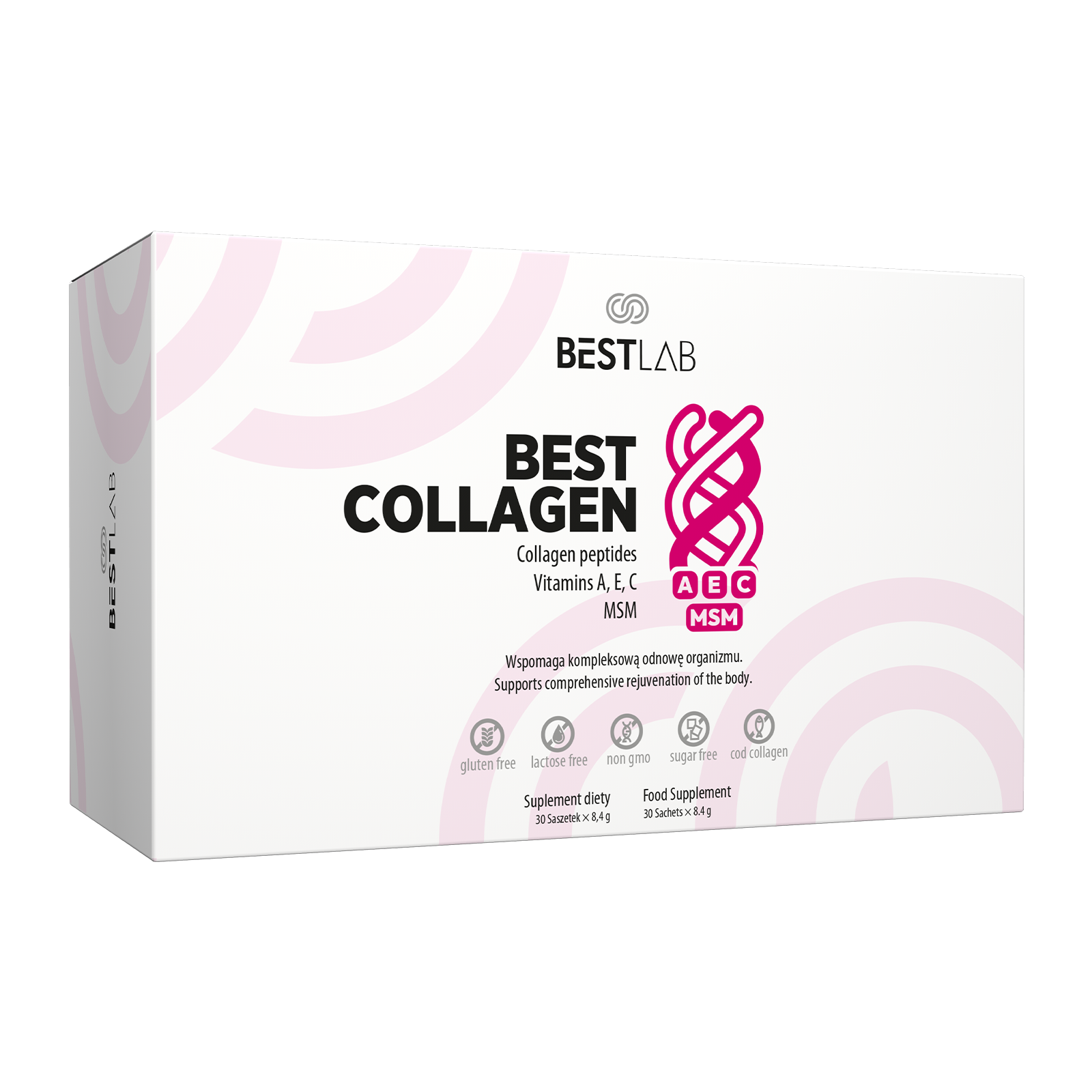
BestCollagen
£53.8
View Product →