
Many parents ask themselves what supplements for children are appropriate and when it is worth using them. The cause of vitamin and mineral deficiencies in the youngest may be their insufficient amount in food. Another reason is absorption disorders of a given nutrient in the digestive tract. It also happens that toddlers suffer from food intolerances or have an increased demand for a given substance due to a medical condition.
Contents
Supplements for children should be 100% safe and tailored to their needs. Which preparations are actually worth reaching for? Here are some tips.
Which dietary supplements for children deserve attention?
We distinguish 4 fat-soluble vitamins, namely A, D, E, and K, as well as ten water-soluble ones: biotin, choline, B vitamins, and vitamin C. All of them are compounds essential for the proper functioning of the body.
The body does not produce most of them on its own. Therefore, we must supply them externally in the form of food or supplements. Vitamins play not only a regulatory role but also participate in many processes such as the functioning of the immune system, digestion, and energy production. What ingredients in children’s supplements should we pay special attention to?
- For the youngest, B vitamins are particularly important. They are responsible for the proper functioning of the nervous system. They are crucial in the learning process because they support memory and concentration. Additionally, vitamin B12 should be a mandatory supplement for a child on a vegetarian diet.
- Equally essential are vitamins A, D, E, and K, which are responsible, among other things, for the condition of bones, teeth, skin, and tissue building. All are necessary for maintaining health, as well as proper maturation and growth of a young organism. Therefore, from the beginning, it is worth teaching a child to eat a varied diet. Nevertheless, sometimes it is difficult to provide all nutrients with the diet. Some toddlers eat selectively or have problems with body functioning, e.g., as a result of allergies, diseases, or absorption disorders of certain substances from food. In such cases, we should consider supplementation.
- On the other hand, in the case of vitamins D and K, supplementation is recommended for everyone, especially infants. These two components play a key role in bone tissue mineralization. Their deficiencies can be extremely dangerous, manifesting, among other things, as bone structure disorders, osteopenia, or osteoporosis. Moreover, vitamin D participates in building immunity in people of all ages (!).
Child supplements and age
When determining the type and dose of a supplement, let’s be guided by the child’s health and age. Dietary supplements for newborns and infants are generally limited to preparations with vitamin K to avoid clotting disorders, as well as vitamin D3, which is important for bone and tooth development. It is only at the end of the 6th month of life that it is time to expand the diet.
Supplements for children between 1 and 3 years of age are mainly products containing vitamins A, E, K, C, and B vitamins. Preschoolers, on the other hand, often eat selectively, which is why they sometimes suffer from vitamin and mineral deficiencies. If a child eats a varied diet, usually vitamin D supplementation is sufficient. However, for example, in cases of food neophobia or lack of appetite, any dietary deficiencies can be supplemented with a suitably chosen supplement. During this period, the demand for B vitamins, as well as vitamins A, E, K, and C, increases. The situation is similar in school age.
Gummy vitamins: tasty dietary supplements for children
If a toddler does not receive all necessary nutrients with their diet, children’s dietary supplements can be introduced. Gummy vitamins have become particularly popular in recent years, combining vitamin sets with certified plant extracts. Their action is based on the combination of biologically active substances derived from natural fruit extracts. When choosing them, one should be guided by a high standardization index – this element indicates whether the product will be effective.
With the youngest in mind, the Best4Kids children’s supplement was created, containing, among other things, bromelain from pineapple, extracts from cranberry fruit, pomegranate fruit, rose hip fruit, and aronia berries. The product’s composition includes not only natural plant extracts but also a set of B vitamins supporting brain health, vitamins K and D3, as well as vitamins A and E. Thanks to its tasty gummy form, the preparation is exceptionally pleasant to use.
Sources:
- Rusińska A., Płudowski P., Walczak M. et al., Principles of vitamin D supplementation and treatment – 2018 amendment, Advances in Neonatology, 2018, 24 (1).
- H. Weker, M. Barańska, M. Strucińska, Child nutrition guide from 1 to 3 years of age: https://www.imid.med.pl/images/do-pobrania/poradnik.pdf
- Jarosz M., Principles of proper nutrition for children and adolescents and tips for a healthy lifestyle, Institute of Food and Nutrition, 2008, 1st edition.
- Prof. J. Książyk, MD, PhD, Prof. J. Szczapa, MD, PhD, P. Sawiec, MD, Vitamins in a child’s diet: https://www.mp.pl/pacjent/pediatria/zywienie/52608,witaminy-w-diecie-dziecka
Check also
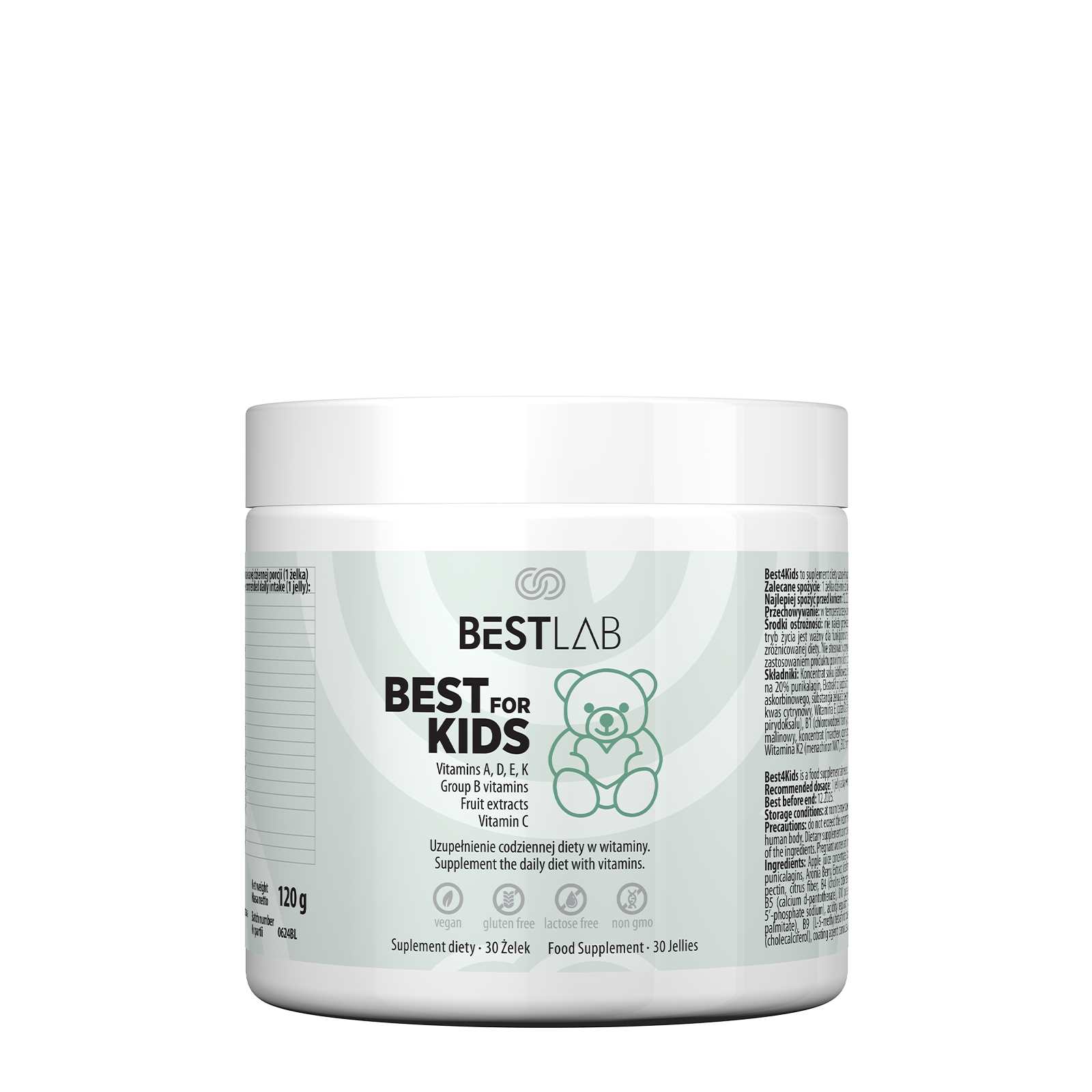
Best4Kids 30 gels
£37.8
View Product →