
Do you constantly experience sugar spikes and drops and are you fed up with it? Do you experience frequent mood swings, fatigue, difficulty losing weight, and hormonal problems? Do you finally want to eat what you like and feel good, while also being sure that you’re providing your body with everything it needs?
Contents
- What is insulin resistance and how does it affect the body?
- Signals indicating insulin resistance and factors contributing to its development
- Do probiotics affect insulin and glucose metabolism?
- Vitamin D – can its deficiency worsen insulin sensitivity?
- How to combine supplementation with diet to see real results?
- Why diet and lifestyle are not everything? The role of supplementation in supporting glucose metabolism
- What herbs for insulin resistance?
Do you constantly experience sugar spikes and drops and are you fed up with it? Do you experience frequent mood swings, fatigue, difficulty losing weight, and hormonal problems? Do you finally want to eat what you like and feel good, while also being sure that you’re providing your body with everything it needs? Perhaps you already have an insulin resistance diagnosis – or maybe you’re just starting to suspect that you feel different from others. Insulin resistance (IR) is a complex metabolic disorder that affects a growing number of people worldwide – both adults and adolescents. Learn about current medical knowledge on IR and effective tips for improving insulin sensitivity, including the role of supplementation. Insulin resistance is not a sentence – it’s a signal from your body that it needs support. Find out what insulin resistance is, what signals indicate it, what diet insulin resistance requires, and what are the best supplements for insulin resistance.
What is insulin resistance and how does it affect the body?
Insulin resistance is a state in which the body’s cells (mainly muscle, fat, and liver cells) become less sensitive to the action of insulin – a hormone secreted by the pancreas in response to an increase in blood glucose (sugar) levels. In response to this state, the body starts to produce more insulin to maintain a normal blood sugar level – this is called compensatory hyperinsulinemia (i.e., an increased amount of insulin as an attempt to compensate for the disturbances). This mechanism works effectively for a time, but eventually leads to pancreatic overload (i.e., its excessive work), and in the long run – to the development of type 2 diabetes (a disease in which the body stops properly regulating blood sugar levels).
Blood sugar levels affect the entire body, the functioning of the heart, kidneys, eyes, and blood vessels. Insulin regulation is therefore crucial for maintaining metabolic health and preventing complications such as heart disease, kidney damage, and vision problems. Furthermore, stable blood sugar levels help maintain energy and a good mood, and also support the proper functioning of the immune system – which is why insulin level regulation is very important.
Signals indicating insulin resistance and factors contributing to its development
Signals indicating insulin resistance include: chronic fatigue, sudden weight gain, sleep problems, difficulty concentrating, and frequent infections and weakened immunity. These symptoms can be vague and easily confused with other ailments, so it is important to pay attention to symptoms such as cravings for sweets, drowsiness after meals, and difficulty maintaining a stable body weight. The following play a significant role in the mechanism of insulin resistance:
- low-grade chronic inflammation,
- oxidative stress,
- gut microbiota disorders,
- excess free fatty acids (lipotoxicity),
- unfavorable diet composition and sedentary lifestyle.
As a result, blood glucose and insulin levels can be elevated, leading to metabolic disorders, mood swings, fatigue, difficulty losing weight, and hormonal problems.
This is not a condition that develops overnight. It’s a silent process – but fortunately, it is reversible if we take proper care of ourselves.
Do probiotics affect insulin and glucose metabolism?
Increasing research indicates that the gut microbiota (i.e., the collection of microorganisms inhabiting the intestines) plays an important role in regulating metabolism, immunity, and glucose metabolism. Therefore, probiotics – i.e., live cultures of “good” bacteria that support the balance of intestinal microflora – are gaining increasing importance also in the context of insulin resistance. Scientific studies indicate that probiotic supplementation can improve glycemic control indicators such as fasting plasma glucose (FPG), glycated hemoglobin (HbA1c), and the Homeostatic Model Assessment of Insulin Resistance (HOMA-IR) index. In healthy individuals and pregnant women with gestational diabetes (GDM), probiotics showed a positive effect on insulin sensitivity and glucose metabolism. The effects were more noticeable in individuals with a normal body weight than in obese individuals.
Vitamin D – can its deficiency worsen insulin sensitivity?
Does vitamin D help with insulin resistance? Its presence definitely does. Vitamin D is actually a steroid hormone that our body can produce on its own – if only it has the right conditions. Production occurs in the skin under the influence of UVB radiation, i.e., when we expose our body to the sun. In Poland (and in a temperate climate), the sun alone is not enough for most of the year – from October to March, the angle of incidence of sunlight is too low for the skin to effectively produce vitamin D, even with daily walks. Although vitamin D is present in some food products, its amounts are too small to cover the daily requirement – meanwhile, studies indicate that vitamin D plays a significant role in regulating insulin secretion and improving tissue sensitivity to this hormone. Vitamin D supports the work of pancreatic cells that produce insulin and helps tissues respond better to it. Its absence can lead to disturbances in glucose transport to cells and intensify inflammation in the body, which further complicates blood sugar control.
Studies show that vitamin D supplementation can improve outcomes such as fasting glucose levels, glycated hemoglobin (HbA1c), and insulin sensitivity. It is recommended to take vitamin D in doses adjusted to individual needs, especially in people with insulin resistance, type 2 diabetes, or obesity. Maintaining an adequate level of vitamin D in the body can support the treatment of insulin resistance and improve metabolic health.
How to combine supplementation with diet to see real results?
Diet and lifestyle strongly influence the maintenance of healthy glucose metabolism. When struggling with insulin resistance, it is worth adopting a diet that supports metabolic health and improves insulin sensitivity. Here are some dietary recommendations:
- Low glycemic index products: Choose complex carbohydrates, such as whole-grain bread, brown rice, groats, and vegetables and fruits that maintain stable blood glucose levels.
- Protein and healthy fats: Include lean meat (e.g., chicken), fish, legumes, and plant-based fats such as nuts and seeds in your diet.
- Fiber richness: Consume fiber-rich products, such as vegetables, fruits, legumes, and whole-grain cereal products.
- Limit sugar and highly processed products: Avoid sugar, sweets, fruit juices, and highly processed products.
- Drink plenty of water and unsweetened tea: Water and green tea are beneficial for metabolic health.
Simple recommendations are not always easy to apply daily. If you’re wondering how to supplement your diet for insulin resistance to ensure your body receives all necessary ingredients – you can reach for, which support blood sugar regulation, especially in individuals with insulin resistance or other metabolic disorders. Even with a healthy diet, some important ingredients, such as vitamins and minerals, which are crucial for sugar management, may be lacking. The composition of supplements is designed to include all essential macroelements that support the body. They therefore contain potassium, which supports the body’s electrolyte balance and maintains proper muscle function; magnesium, which calms the nervous system and improves tissue sensitivity to insulin; sodium, which maintains proper cell hydration levels; and creatine, which increases physical performance and affects muscle strength.
Why diet and lifestyle are not everything? The role of supplementation in supporting glucose metabolism
Diet and lifestyle are fundamental elements in maintaining healthy glucose metabolism, but in some cases, they may not be sufficient. Supplementation can effectively assist with difficulties in sugar management. , containing ingredients such as berberine, are recommended due to their proven effectiveness in improving insulin sensitivity and regulating blood glucose levels. Berberine works by increasing the activity of metabolic enzymes and reducing inflammation, which contributes to improved metabolic health. Supplementation can help fill dietary gaps and support the body in maintaining healthy metabolic parameters.
What herbs for insulin resistance?
Herbs can be a valuable complement to diet and lifestyle. While they will not replace medical treatment or healthy eating, some of them have a supportive effect on glucose metabolism, improving tissue sensitivity to insulin or slowing down glucose absorption.
Below you will find a list of herbs most often recommended for insulin resistance, along with a brief description of their effects:
- Cinnamon (Cinnamomum cassia)
- May improve cell sensitivity to insulin.
- Some studies suggest it lowers fasting glucose levels and HbA1c (an indicator of average blood sugar).
- Note: in large quantities, cassia cinnamon contains coumarin, which can be taxing on the liver – it’s worth opting for Ceylon cinnamon.
- White mulberry (Morus alba)
- Mulberry leaves inhibit the action of carbohydrate-breaking enzymes, so glucose enters the bloodstream more slowly.
- Particularly recommended before carbohydrate-rich meals.
- Fenugreek (Trigonella foenum-graecum)
- Its seeds contain galactomannans, which can slow down glucose absorption from the digestive tract.
- Also used for bloating and digestive problems.
- Green tea (Camellia sinensis)
- Rich in catechins, which have anti-inflammatory effects and support glucose metabolism (i.e., converting sugar into energy).
- May gently lower blood sugar levels and improve lipid profile.
- Berberine (associated with herbs such as barberry, goldenseal)
- Although it is a plant compound, it is compared to drugs like metformin.
- May improve insulin sensitivity, lower blood sugar and lipid levels.
- It is best taken in the form of standardized supplements, after consulting a doctor.
Sources:
- Suliburska J., Kuśnierek J., Nutritional and Non-nutritional Factors in the Development of Insulin Resistance, Forum Zaburzeń Metabolicznych, 2010.
- Inchauspé J., Glucose Revolution, 2022.
- Słoma M., Szeja N., The Significance of Anthocyanins in Insulin Resistance, Forum Zaburzeń Metabolicznych, 2018.
- Barchetta I. et al., Vitamin D and metabolic disorders, Int J Endocrinol, 2011.
- Hruby A. et al., Magnesium intake and metabolic syndrome, Am J Clin Nutr, 2014.
- Genazzani AD et al., Inositols in PCOS, Gynecol Endocrinol, 2018.
- Kobyliak N. et al., Probiotics in obesity and insulin resistance, Nutr J, 2016.
- Zhang Y. et al., Berberine and type 2 diabetes, Metabolism, 2008.
- Shimamoto K., Insulin resistance syndrome and hypertension, 2000 Jan;75(1):9-14.
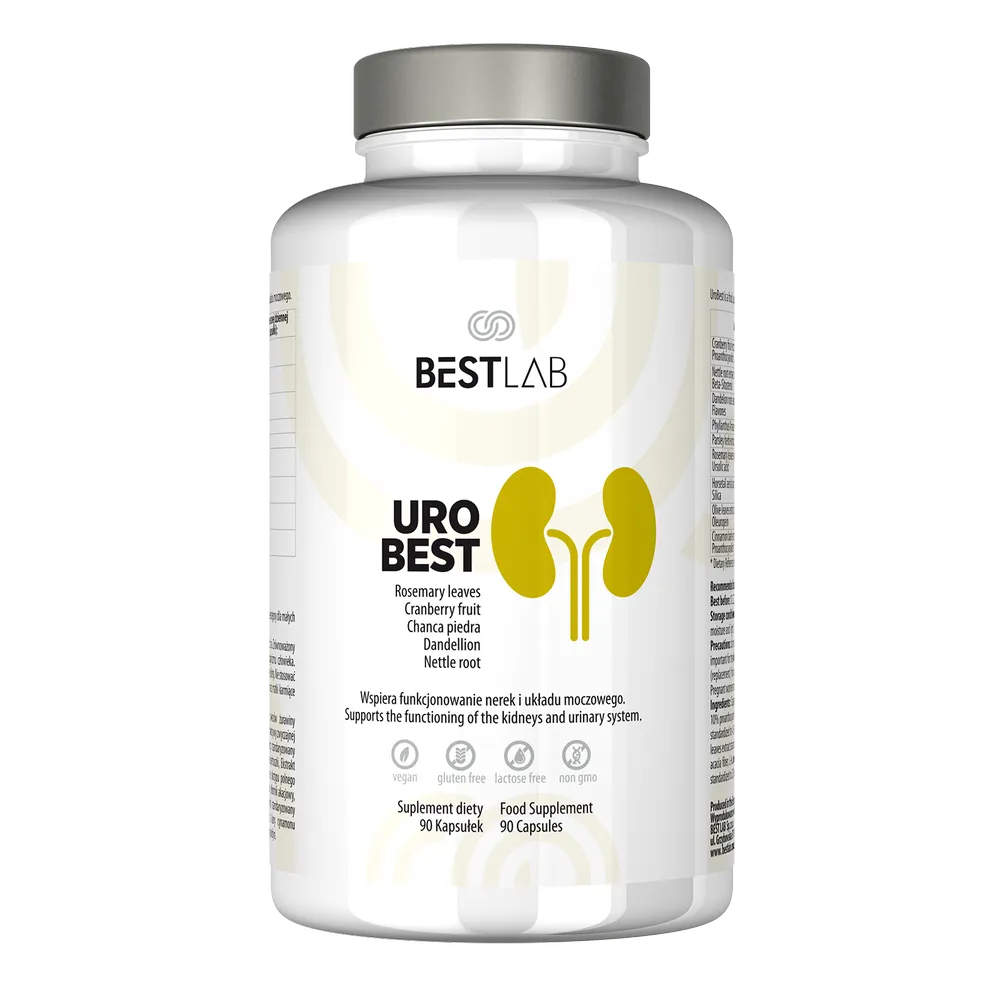
UroBest – Kidney & Urinary Tract Support
£32
View Product →