
Iron is essential for our health. Its adequate supply supports the functioning of the body on many levels. Find out how to effectively incorporate iron into your diet and when it is worth supplementing it with supplements.
Contents
- When to supplement iron?
- Symptoms of iron deficiency and ways to supplement
- How to absorb iron from diet and supplements?
- Best iron supplements
- The role of iron in the human body
- Factors affecting iron demand
- FAQ
- What are the main functions of iron in the body?
- What are the symptoms of iron deficiency?
- Which products are rich in iron?
- How to improve iron absorption from the diet?
- When should iron supplementation be considered?
- What are the effects of excess iron in the body?
- Can iron supplementation cause side effects?
- What are the differences between heme and non-heme iron?
- What factors affect iron demand?
From the article you will learn:
- why iron is essential for human health
- what are the most common symptoms of iron deficiency
- which foods are the best source of iron
- when it is worth considering iron supplementation
- how to improve iron absorption from food
- how iron supports the immune system
- what are the most important factors affecting iron demand
When to supplement iron?
Iron supplementation is recommended when the body does not receive enough of this element from the diet. This applies to people with iron deficiencies, athletes, and pregnant women. In such cases, it is worth considering incorporating appropriate mineral supplements into the diet.
It is especially worth reaching for iron supplements when your daily diet does not cover the body’s increased demand – for example, during high physical activity, stress, weakness, or periods of intense work. Regular iron supplementation helps maintain vitality, concentration, and proper energy levels every day.
Symptoms of iron deficiency and ways to supplement
Iron deficiency manifests itself with various symptoms that may indicate the need for action to supplement it. The most common symptoms of deficiency include: chronic fatigue, weakness, pale skin, headaches, and dizziness. In some cases, heart palpitations, shortness of breath, brittle hair and nails, and dry skin may also occur. It is worth paying attention to these signals to react in time and prevent more serious health consequences.
There are various ways to supplement iron in the body. Incorporating iron-rich foods into your diet, such as red meat, liver, fish, legumes, spinach, or whole-grain products, can help increase its level. It is also worth combining these products with sources of vitamin C, which improves iron absorption. Regular monitoring of iron levels and adjusting diet and supplementation to the individual needs of the body are crucial for maintaining optimal health.
How to absorb iron from diet and supplements?
To increase iron absorption from the diet, it is worth combining iron-rich products with sources of vitamin C, such as citrus fruits, bell peppers, or parsley. Vitamin C supports the absorption of non-heme iron, present in plant products. Avoid consuming coffee and tea during meals, as the tannins they contain can inhibit iron absorption. It is also worth limiting the simultaneous consumption of calcium-rich products, such as milk and its derivatives, as calcium can hinder iron absorption.
In the case of iron supplements, it is recommended to take them on an empty stomach or between meals, which may increase their absorption. Drinking mineral supplements with orange juice or another vitamin C-rich drink can further improve iron absorption. Avoid combining them with preparations containing calcium or magnesium, as these can reduce the effectiveness of iron absorption.
A good solution is to combine iron supplementation with the VitaminBest preparation, which provides a complex of vitamins and minerals supporting proper body functions. Its ingredients, such as vitamin C, B vitamins, zinc, and copper, can support iron absorption and replenish other deficiencies, providing the body with more complete nutritional support.
Best iron supplements
Choosing the right iron supplement is of great importance for effectively replenishing deficiencies of this element. Preparations available on the market differ in the chemical form of iron, additional ingredients supporting its assimilation, and tolerance by the digestive system.
The best iron supplements are those that contain iron in chelated form (e.g., iron bisglycinate) or bivalent iron (Fe²⁺), as they are characterized by high bioavailability and a lower risk of stomach irritation. It is also worth choosing preparations enriched with vitamin C, which increases iron absorption, and vitamin B12 and folic acid, which support blood-forming processes.
A well-chosen supplement should be gentle on the digestive tract, easy to dose, and adapted to the individual needs of the body. Regular use of such a preparation can help maintain proper iron levels, support vitality, and the proper functioning of the immune and nervous systems.
The role of iron in the human body
The role of iron in the human body is crucial for many life processes. As a component of hemoglobin, iron enables the transport of oxygen from the lungs to all cells of the body, which is essential for energy production and proper tissue function. In addition, iron is part of myoglobin, a protein that stores oxygen in muscles, which supports their performance during physical exertion.
Iron’s functions in the body also include participation in DNA synthesis, neurotransmitter production, and support for the immune system. Iron is essential for the proper functioning of enzymes involved in energy metabolism, which affects the overall condition of the body. Iron deficiency can lead to anemia, weakened immunity, and concentration disorders.
Factors affecting iron demand
The demand for iron in the human body depends on many factors, such as age, gender, physical activity, and health status. Children and adolescents during periods of intense growth need more iron to support body development. Women of childbearing age have a higher demand for iron due to regular blood loss during menstruation. During pregnancy, these needs further increase to ensure proper fetal development. Men usually have a lower demand for iron compared to women.
Intense physical activity, especially in athletes, can increase iron demand due to greater red blood cell production and iron loss through sweat. Health status also affects the body’s needs; people with chronic diseases, such as digestive system disorders, may have impaired iron absorption, which increases their demand. A diet poor in iron or containing substances that inhibit its absorption, such as phytates or polyphenols, can lead to deficiencies. Therefore, it is important to adjust the diet and possible supplementation to individual needs, taking into account all these factors.
FAQ
Iron plays a key role in oxygen transport, hemoglobin production, and supports metabolic processes, which is essential for the proper functioning of the body.
Typical symptoms include fatigue, weakness, pale skin, headaches, and dizziness. In some cases, heart palpitations and shortness of breath may also occur.
Iron-rich foods include red meat, liver, fish, legumes, spinach, and whole-grain products.
Combining iron-rich foods with sources of vitamin C, such as citrus fruits or bell peppers, can increase its absorption. Avoid consuming coffee and tea during meals, as they can inhibit iron absorption.
Supplementation is recommended in cases of diagnosed iron deficiency, for pregnant women, athletes, and people with chronic diseases affecting iron absorption.
Excess iron can lead to hemochromatosis, organ damage, and an increased risk of heart disease. Therefore, it is important to monitor iron levels and avoid excessive supplementation.
Yes, side effects such as stomach pain, constipation, nausea, or dark stools may occur. If adverse symptoms occur, consult a doctor.
Heme iron, present in animal products, is better absorbed by the body than non-heme iron, which is found in plant products.
Iron demand depends on age, gender, health status, and level of physical activity. For example, women of childbearing age have a higher demand due to blood loss during menstruation.
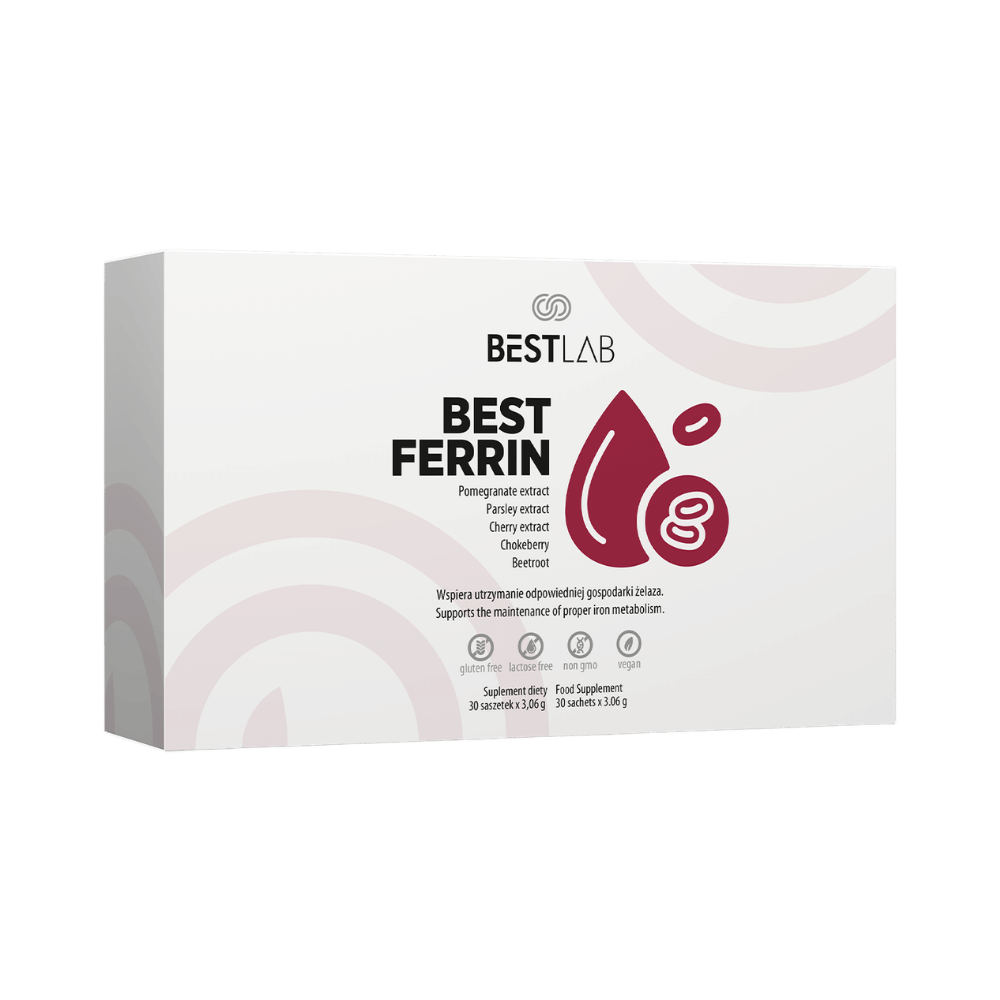
BestFerrin – Plant-Based Iron Support Formula
£46.5
View Product →